

If you're like many home gardeners, you've experienced the thrill of planting cucumbers with high hopes, only to be disappointed by a lackluster harvest. The good news is that a simple soil amendment can make a significant difference. This small addition transformed my cucumber yield, tripling the production compared to last year. What is this miraculous ingredient? One tablespoon of Epsom salt in each planting hole.
Understanding the Power of Epsom Salt
Before we dive into how to use it, let's explore why Epsom salt is so effective for cucumbers. Comprised of magnesium sulfate, Epsom salt is a naturally occurring mineral with a chemical structure that provides valuable nutrients to plants. Magnesium is essential for photosynthesis, the process by which plants convert sunlight into energy. It also helps with the uptake of other essential nutrients like nitrogen and phosphorus. Sulfur aids in the production of vital enzymes and proteins, enhancing plant growth and resilience.
The Benefits for Cucumbers
Boosting Photosynthesis
Cucumbers are heavy feeders and require ample nutrients to produce bountiful fruits. Magnesium, found in Epsom salt, is crucial for forming chlorophyll—the green pigment in plants that captures sunlight. With enhanced photosynthesis, your cucumber plants will grow more vigorously and produce healthier fruits.
Improving Nutrient Absorption
Cucumbers thrive when they can efficiently absorb nutrients from the soil. By providing magnesium and sulfur, Epsom salt helps improve root structure and increases the plant's ability to access soil nutrients. This leads to more robust growth and a greater yield.
Enhancing Fruit Production
The improved photosynthetic activity and nutrient absorption result in more flowers and, consequently, more fruits. The presence of sufficient magnesium minimizes the risk of blossom end rot, a common issue that can ruin your cucumber harvest.
How to Use Epsom Salt for Cucumbers
Preparing the Planting Site
Before planting, prepare your garden bed. Choose a sunny location with well-draining soil. Cucumber plants need full sunlight to thrive, so ensure the site receives at least 6-8 hours of sun each day. Amend the soil with organic matter, such as compost, to enhance its nutrient content and drainage.
Adding Epsom Salt
-
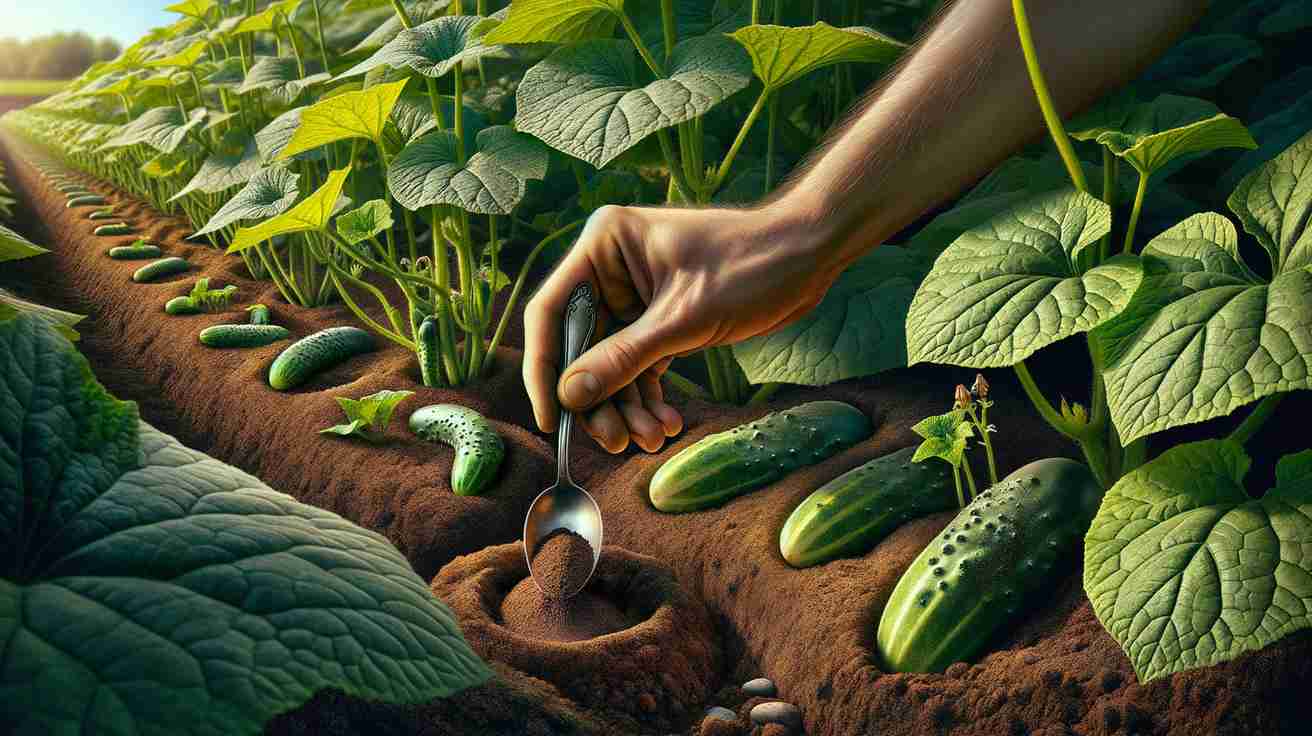
Measure: For each planting hole, use one tablespoon of Epsom salt. This amount is sufficient to provide the necessary magnesium and sulfur without overwhelming the plant.
-
Mix: Incorporate the Epsom salt into the bottom of each planting hole. Mix it well with the soil to ensure even distribution.
-
Plant: Place your cucumber seedling or seeds into the hole, covering them with soil. Water thoroughly to help the Epsom salt dissolve and start working its magic.
Routine Care and Maintenance
Once planted, your cucumbers will benefit from consistent care:
- Watering: Cucumbers need regular watering, especially during dry spells. Keep the soil consistently moist but not waterlogged.
- Mulching: Apply a layer of mulch around the base of the plants to retain soil moisture and reduce weeds.
- Fertilizing: Apply a balanced fertilizer every 3-4 weeks to support growth and fruiting.
Other Tips for Maximizing Cucumber Yield
Companion Planting
Consider companion planting to enhance cucumber growth. Marigolds can deter pests, while beans can fix nitrogen in the soil, benefiting the cucumbers.
Pest and Disease Management
Keep an eye out for common cucumber pests such as aphids and cucumber beetles. Use organic methods like neem oil or insecticidal soap to manage infestations. Practice crop rotation to prevent soil-borne diseases.
Trellising
Train your cucumber plants to grow vertically by using trellises. This not only saves space but also improves air circulation, reducing the risk of disease and making harvesting easier.
Harvesting Your Cucumbers
Pick cucumbers when they reach the desired size, typically 6-8 inches long. Harvest regularly to encourage continuous production. Use a sharp knife or pruners to cut the cucumbers from the vine, avoiding any damage to the plant.
FAQs
1. Can I use Epsom salt for other plants?
Yes, Epsom salt can benefit various plants, including tomatoes, peppers, and roses, due to its magnesium content.
2. How often should I add Epsom salt to my cucumber plants?
Add Epsom salt once at planting. You can also use a dilute Epsom salt solution (1 tablespoon per gallon of water) as a foliar spray every month if needed.
3. What if I add too much Epsom salt?
Excessive Epsom salt can lead to nutrient imbalances. Stick to the recommended amount to avoid harming your plants.
4. Is Epsom salt the same as table salt?
No, Epsom salt is magnesium sulfate, while table salt is sodium chloride. They have different chemical properties and uses.
5. Can Epsom salt help with blossom end rot?
Yes, providing magnesium can help prevent blossom end rot in cucumbers and other plants.
6. Should I test my soil before using Epsom salt?
It's always a good idea to test your soil to understand its current nutrient levels and adjust amendments accordingly.
7. Can I use Epsom salt in container gardening?
Yes, Epsom salt can be used in container gardening to provide essential nutrients to your plants.
8. Are there any plants that don't benefit from Epsom salt?
Some plants, like sage, may not require additional magnesium. It's best to research the specific needs of your plants.
9. How can I tell if my cucumbers need more magnesium?
Look for signs like yellowing leaves or poor fruit production, which may indicate a magnesium deficiency.
10. Is Epsom salt organic?
Epsom salt is a naturally occurring mineral and is considered safe for organic gardening practices.
Discussion (0)
No comments yet. Be the first to start the conversation!
Leave a Reply