Planting potatoes is a time-honored tradition, a staple of both small gardens and large farms alike. Yet, despite its seeming simplicity, many gardeners find themselves disappointed with their potato yield. The truth is, there are several key techniques that can dramatically improve your harvest. Whether you're a novice or a seasoned gardener, understanding these methods can make all the difference. Let's delve into what really works when it comes to planting potatoes.
Choosing the Right Potato Variety
Choosing the right potato variety is crucial for a successful harvest. Potatoes are generally classified into three categories: early, mid-season, and late varieties. Early potatoes, such as 'Red Norland' and 'Yukon Gold', are great if you want a quick harvest. They mature in about 70 to 90 days and are ideal for those with short growing seasons. Mid-season varieties, like 'Kennebec', take about 90 to 110 days, while late-season potatoes, such as 'Russet Burbank', need 110 to 135 days to mature.
Consider your climate and the length of your growing season when selecting a variety. In colder climates, early potatoes are often the best choice, as they can be harvested before the first frost.
Preparing Your Seed Potatoes
Selecting Seed Potatoes
Start with certified seed potatoes. These are specifically grown for planting and are free of diseases that could ruin your crop. Avoid using supermarket potatoes, as they might carry diseases and are often treated to prevent sprouting.
Chitting Potatoes
Chitting involves encouraging your seed potatoes to sprout before planting. This process can give your potatoes a head start, leading to an earlier and more abundant harvest. To chit potatoes, place them in a cool, light place with the eyes facing upwards. After a few weeks, you'll notice small shoots emerging. Aim for shoots that are about 1 inch long before planting.
Preparing the Soil
Soil Composition
Potatoes prefer well-drained, loose soil. Heavy, compacted soil can lead to poor growth and disease. If your soil is heavy clay, consider adding compost or sand to improve its texture. The ideal pH for potatoes is slightly acidic, around 5.0 to 6.0. You can adjust the pH with agricultural lime or sulfur, depending on your soil's current state.
Fertilizing the Soil
Incorporate a balanced fertilizer or well-rotted organic matter into the soil before planting. Potatoes are heavy feeders and benefit from additional nutrients. A 5-10-10 fertilizer, which is high in phosphorus and potassium, works well. Avoid using too much nitrogen as it can lead to lush foliage with few tubers.
Planting Techniques
Traditional Trench Method
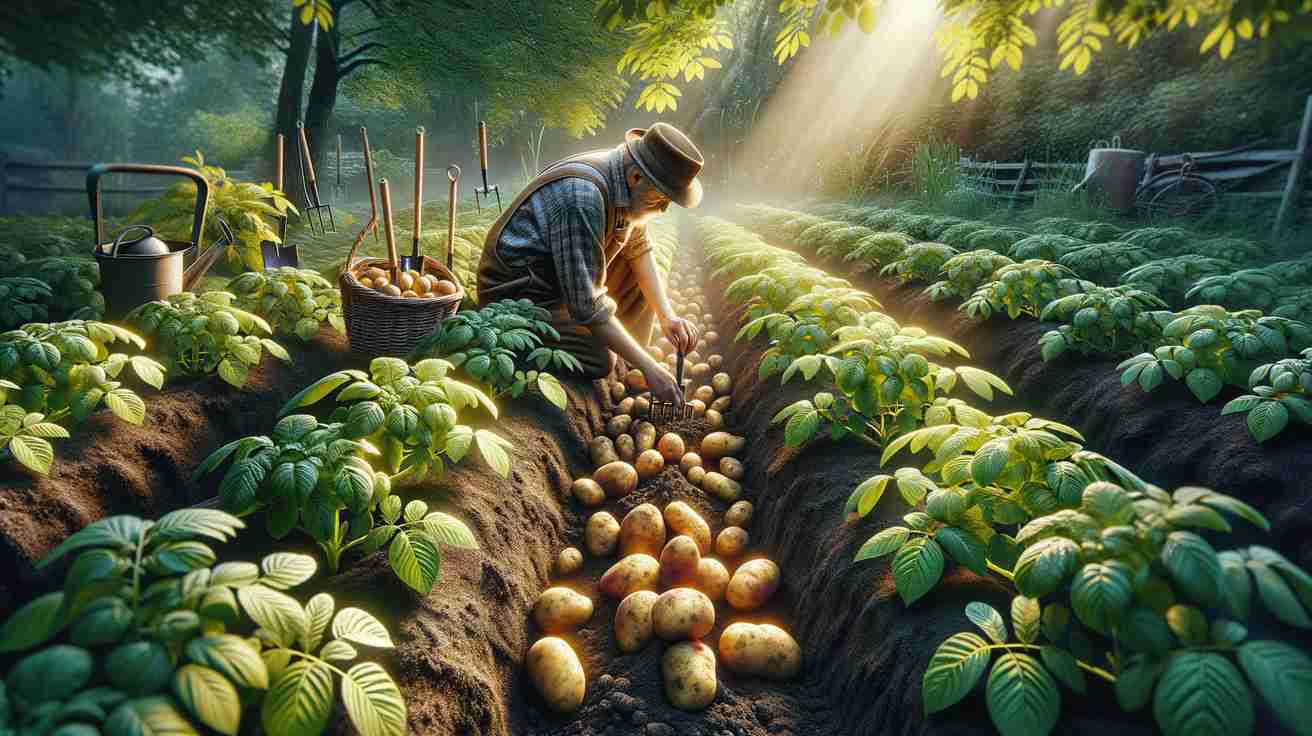
The trench method is a classic way to plant potatoes. Dig a trench that is about 6 to 8 inches deep. Place your seed potatoes in the trench about 12 inches apart, with the sprouts facing upwards. Cover the potatoes with about 4 inches of soil, leaving the rest of the trench open for hilling as the plants grow.
No-Dig Method
The no-dig method is gaining popularity, especially among those who prefer low-maintenance gardening. This involves laying seed potatoes on the soil surface and covering them with straw or hay. As the plants grow, continue adding more straw. This method can be less labor-intensive and is excellent for poor soil conditions.
Container Growing
For those with limited space, growing potatoes in containers is a viable option. Use a large pot or grow bag with good drainage. Start by filling the container with about 4 inches of soil, place your seed potatoes on top, and cover with an additional 4 inches of soil. As the plants grow, continue adding soil until the container is full.
Caring for Your Potato Plants
Watering
Potatoes need consistent moisture, especially during tuber formation. Water your plants deeply once a week, ensuring the soil remains moist but not waterlogged. Inconsistent watering can lead to issues like hollow heart or cracked tubers.
Hilling
Hilling is the process of mounding soil around the base of the potato plants as they grow. This encourages more tubers to form and prevents them from being exposed to sunlight, which can cause them to turn green and become toxic. Hill your potatoes every few weeks until the plants begin to flower.
Pest and Disease Management
Potatoes can be susceptible to pests such as Colorado potato beetles and diseases like late blight. Regularly inspect your plants for signs of infestation or disease. Hand-pick any visible beetles and use organic sprays or neem oil to manage pests. Practice crop rotation and avoid planting potatoes in the same spot for consecutive years to minimize disease risk.
Harvesting and Storing Potatoes
When to Harvest
The right time to harvest depends on the variety and your needs. For new potatoes, harvest about two to three weeks after the plants flower. For full-sized tubers, wait until the foliage has died back. Gently dig around the plants to avoid damaging the potatoes.
Curing and Storing
After harvesting, cure your potatoes by letting them sit in a cool, dark place for about two weeks. This toughens the skin and extends their storage life. Store cured potatoes in a dark, well-ventilated area with temperatures around 45 to 50°F. Avoid storing them in the refrigerator, as this can convert starches to sugars and alter the taste.
Frequently Asked Questions
1. Can I plant potatoes from the grocery store?
It's not recommended. Grocery store potatoes may carry diseases and are often treated to prevent sprouting.
2. What is chitting, and is it necessary?
Chitting is the process of pre-sprouting potatoes before planting. While not necessary, it can lead to an earlier and more abundant harvest.
3. How deep should I plant my seed potatoes?
Plant seed potatoes about 6 to 8 inches deep. Cover them with 4 inches of soil initially, then continue to hill as they grow.
4. How often should I water my potato plants?
Water deeply once a week, ensuring the soil remains consistently moist but not waterlogged.
5. What are some common potato pests?
Common pests include Colorado potato beetles and aphids. Regular inspection and organic pest control methods can help manage these.
6. Why are my potatoes green?
Potatoes turn green when exposed to sunlight. Ensure they are properly hilled or covered with mulch to prevent sun exposure.
7. Can potatoes be grown in containers?
Yes, potatoes can be successfully grown in large pots or grow bags with good drainage.
8. How do I know when my potatoes are ready to harvest?
For new potatoes, harvest when the plants flower. For mature tubers, wait until the foliage dies back.
9. How should potatoes be stored?
Store potatoes in a cool, dark, and well-ventilated area, ideally at 45 to 50°F.
10. What soil pH is best for growing potatoes?
Potatoes prefer slightly acidic soil with a pH of 5.0 to 6.0.
Discussion (0)
No comments yet. Be the first to start the conversation!
Leave a Reply