

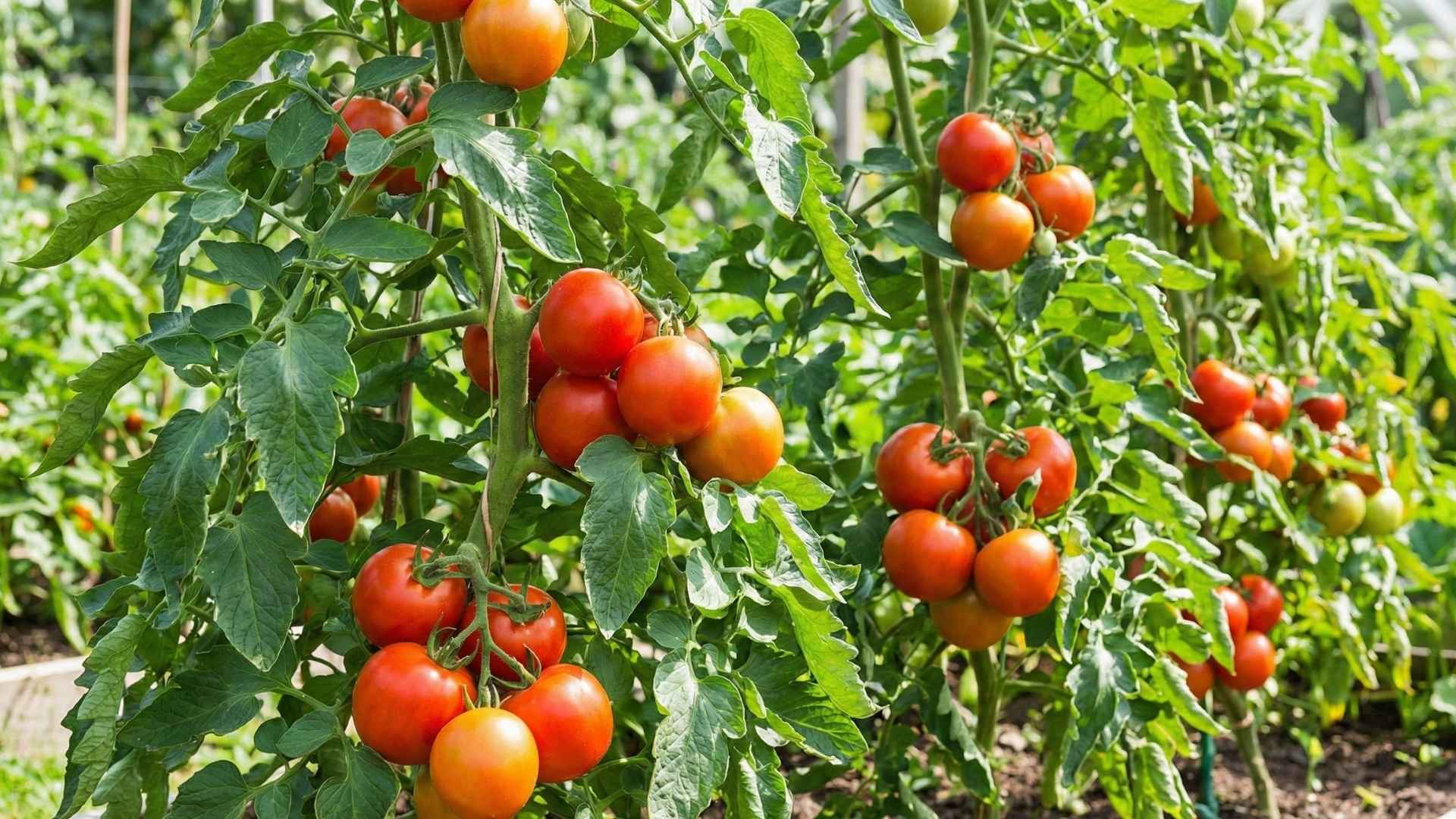
Fast-growing, high-yielding tomatoes are not the result of luck or aggressive feeding. They are the outcome of early structural decisions that determine how the plant builds its roots, directs energy, and responds to stress.
Tomatoes are unusually adaptable plants. When guided correctly in their early stages, they can redirect growth, expand their root systems dramatically, and sustain heavy fruit loads for months. The following five methods are used worldwide by experienced growers because they work with tomato biology, not against it.
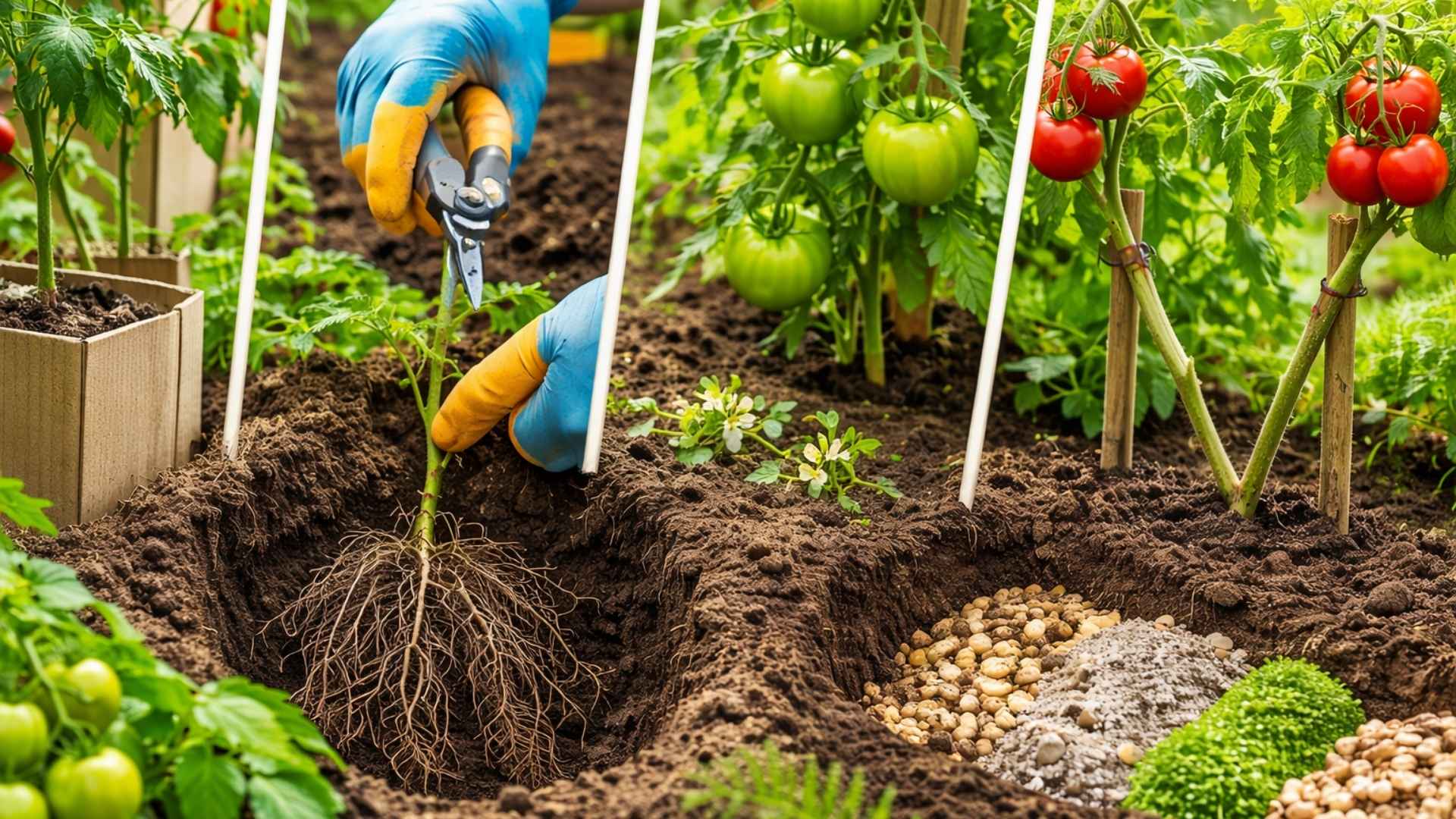
1. Deep Transplanting to Build a Powerful Root System
Tomatoes have a unique ability: any buried section of the stem can produce new roots. This makes deep transplanting one of the most effective growth accelerators available.
When seedlings are planted deeper—sometimes up to the first true leaves—the buried stem develops additional root nodes. This results in:
- faster nutrient uptake,
- improved water efficiency,
- greater resistance to temperature swings,
- stronger above-ground growth.
Deep roots act as an insurance system. The plant becomes less dependent on surface moisture and more stable throughout the season.
2. Removing Early Flowers to Redirect Energy
Early flowering may look promising, but in young tomato plants it is often counterproductive.
At this stage, the plant faces a choice:
- invest energy in fruit production,
- or invest energy in building structure and roots.
Removing the first flower clusters forces the plant to delay reproduction and focus on:
- stem thickness,
- leaf area,
- root expansion.
Once the plant reaches full size, it can support far more flowers and fruits without stress, resulting in a higher total yield.
3. Using Deep Containers or Vertical Growing Systems
Root depth directly influences plant performance. Shallow soil limits potential—regardless of how well the plant is fed.
Deep containers and vertical planting systems allow:
- extensive downward root growth,
- better oxygen availability,
- stable moisture zones.
This is especially important in small gardens or urban spaces. In such conditions, compact or determinate varieties perform exceptionally well, producing heavy yields without excessive vegetative growth.
4. Temporary Growth of Side Shoots to Strengthen Roots
Contrary to common advice, removing all side shoots too early can weaken the plant.
Allowing lower side shoots to grow for a short initial period:
- increases photosynthesis,
- stimulates root expansion,
- strengthens the plant’s internal nutrient flow.
After this foundation is built, selective pruning redirects growth upward. The result is a plant that grows faster later because its root system was allowed to mature first.
5. Creating an Open Canopy and Training Growth Direction
Plant structure affects airflow, pollination, and disease resistance.
An open canopy:
- improves light penetration,
- reduces humidity around leaves,
- allows pollinators easy access to flowers.
Training stems gently—without tight binding—prevents mechanical stress. Some growers also guide the main stem horizontally early on, which stimulates vertical side shoots and increases the number of productive fruiting branches.
Organic Root-Support Blend for Long-Term Growth
Beyond structure, soil biology plays a critical role.
A balanced organic supplement placed near—but not directly against—the roots can support long-term vigor. Such blends typically provide:
- carbohydrates for beneficial microbes,
- slow-release minerals,
- gentle pH stabilization.
When watered regularly, this zone becomes a biologically active nutrient hub that feeds the plant gradually rather than forcing rapid, unstable growth.
The Foundation Principle: Why These Methods Work
Growing a productive tomato plant is comparable to constructing a tall building.
Before height comes stability. Before fruit comes structure. Before abundance comes roots.
By prioritizing foundations early, the plant gains the capacity to grow faster later—without collapsing under its own weight.
FAQ – Faster Tomato Growth Explained
1. Does deep planting really make tomatoes grow faster?
Yes. Deeper roots improve nutrient and water access, accelerating overall growth.
2. Won’t removing flowers reduce my harvest?
No. It increases total yield by allowing the plant to mature fully before fruiting.
3. Are deep containers better than wide ones?
For tomatoes, depth is more important than width due to root behavior.
4. Should I always remove side shoots immediately?
Not in the early phase. Temporary growth supports root development.
5. How does plant structure affect disease resistance?
Better airflow reduces fungal pressure and leaf moisture retention.
6. Can these methods be used in greenhouses?
Yes. They are especially effective in controlled environments.
7. Are these techniques suitable for all tomato varieties?
Yes, with minor adjustments for determinate and indeterminate types.
8. Do these methods replace fertilization?
No. They improve efficiency but do not eliminate nutritional needs.
9. Is horizontal training safe for tomatoes?
Yes, when done gently and early in development.
10. When will I see results?
Structural benefits appear within weeks, yield improvements over the full season.
Discussion (0)
No comments yet. Be the first to start the conversation!
Leave a Reply