Not everyone has time to water plants on schedule, rotate pots, or analyze leaf color every week.
The good news? Some houseplants are built for real life.
They tolerate low light, survive missed watering, and still look good month after month. That’s why these plants dominate homes, offices, and apartments around the world—and why they perform exceptionally well for people who want greenery without stress.
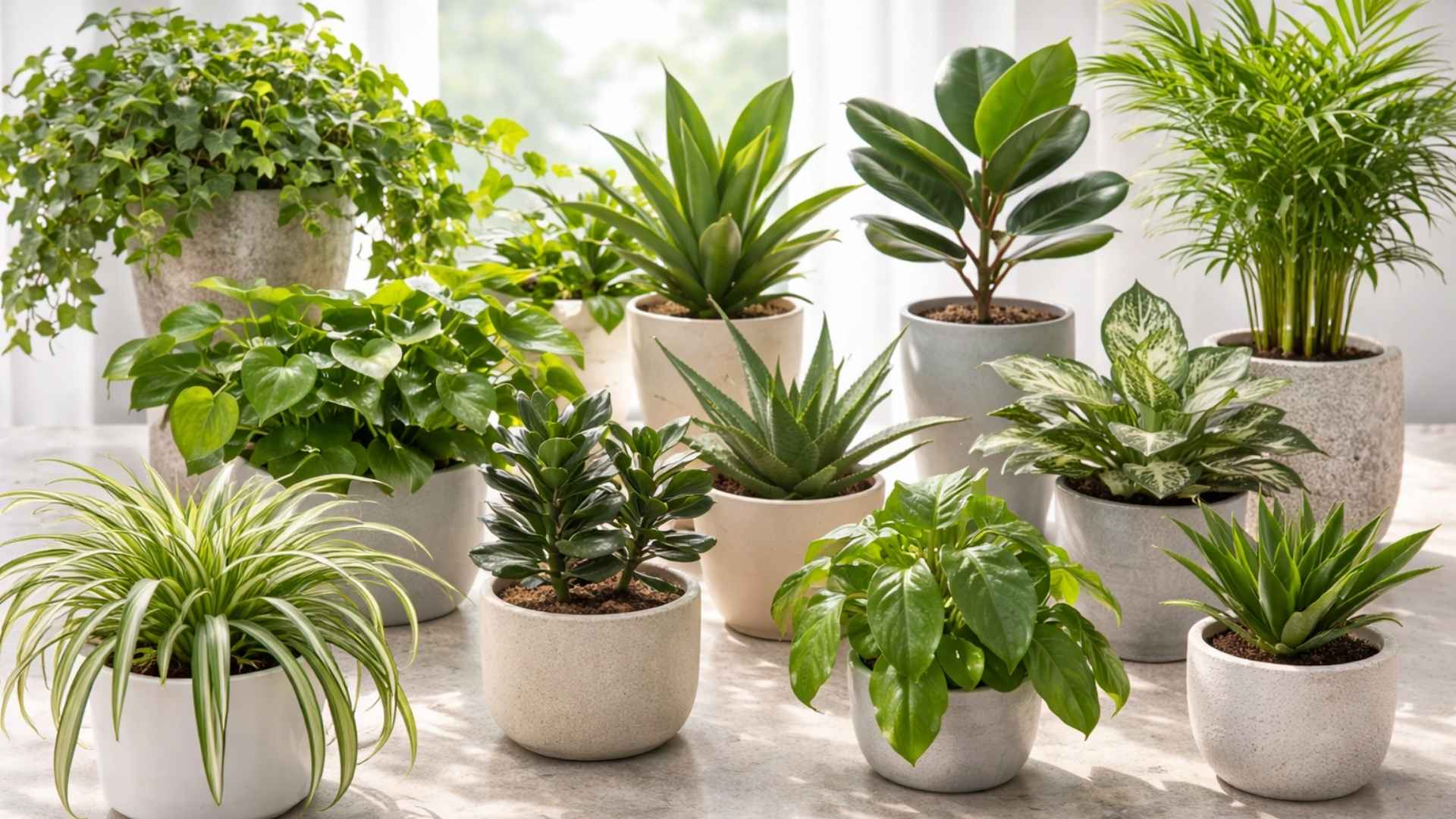
Below is a carefully selected list of the 10 easiest indoor plants to grow, based on resilience, adaptability, and long-term success—not marketing hype.
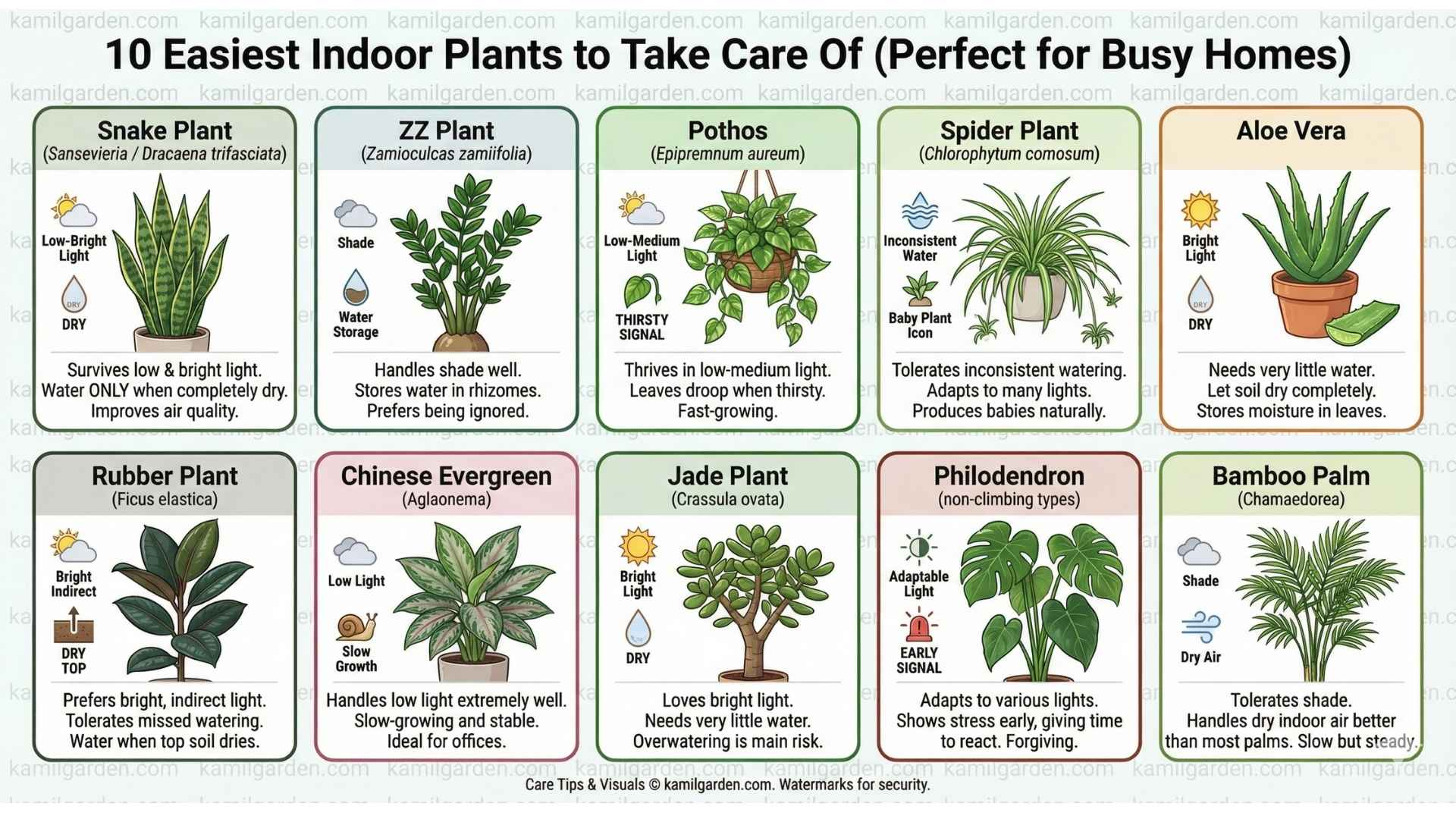
Why Some Houseplants Are Almost Impossible to Kill
Easy-care plants usually share three traits:
- slow metabolism (they don’t panic when conditions change),
- thick leaves or roots that store water,
- tolerance for low or inconsistent light.
These plants evolved to survive difficult environments. Indoors, that makes them incredibly forgiving.
1. Snake Plant (Sansevieria / Dracaena trifasciata)
This plant is legendary for a reason.
- survives low light and bright light,
- tolerates missed watering,
- improves indoor air quality.
Water only when the soil is completely dry. Overwatering is the only real mistake here.
2. ZZ Plant (Zamioculcas zamiifolia)
If you forget plants exist—this one is for you.
- thick underground rhizomes store water,
- glossy leaves stay attractive year-round,
- handles shade better than most plants.
ZZ plants prefer being ignored.
3. Pothos (Epipremnum aureum)
Fast-growing, forgiving, and decorative.
- thrives in low to medium light,
- tells you when it’s thirsty (leaves droop slightly),
- grows beautifully in hanging baskets or shelves.
Perfect for beginners who want visible growth.
4. Spider Plant (Chlorophytum comosum)
A classic that still earns its place.
- tolerates inconsistent watering,
- adapts to many light conditions,
- produces baby plants naturally.
It recovers quickly even after mistakes.
5. Aloe Vera
A plant with benefits beyond looks.
- prefers bright light but tolerates less,
- needs very little water,
- stores moisture in its leaves.
Let the soil dry completely between watering.
6. Rubber Plant (Ficus elastica)
Bold leaves, minimal effort.
- prefers bright, indirect light,
- tolerates missed watering,
- grows steadily without drama.
Water when the top layer of soil dries out.
7. Chinese Evergreen (Aglaonema)
One of the most adaptable indoor plants.
- handles low light extremely well,
- slow-growing and stable,
- decorative even without flowers.
Ideal for bedrooms and offices.
8. Jade Plant (Crassula ovata)
A succulent that lives for decades.
- loves bright light,
- needs very little water,
- grows into a miniature tree over time.
Overwatering is the only real risk.
9. Philodendron (non-climbing types)
Elegant and forgiving.
- adapts to various light levels,
- shows stress early (giving you time to react),
- thrives in average home conditions.
A great step-up plant for beginners.
10. Bamboo Palm (Chamaedorea)
Looks delicate, behaves tough.
- tolerates shade,
- handles dry indoor air better than most palms,
- slow but steady growth.
Excellent for living rooms and corners.
Comparison Table – Easiest Indoor Plants
Tabela: Easiest indoor plants – care overview
| Plant | Light Tolerance | Water Needs | Difficulty |
|---|---|---|---|
| Snake Plant | Low–Bright | Very Low | Very Easy |
| ZZ Plant | Low–Medium | Very Low | Very Easy |
| Pothos | Low–Medium | Moderate | Easy |
| Spider Plant | Medium | Moderate | Easy |
| Aloe Vera | Bright | Low | Easy |
| Rubber Plant | Medium–Bright | Moderate | Easy |
| Chinese Evergreen | Low | Moderate | Very Easy |
| Jade Plant | Bright | Low | Easy |
| Philodendron | Low–Medium | Moderate | Easy |
| Bamboo Palm | Low–Medium | Moderate | Easy |
How to Kill Even “Easy” Plants (So You Don’t)
Most indoor plants die for two reasons:
- too much water,
- pots without drainage.
If you avoid those mistakes, these plants will thrive with minimal effort.
The Universal Care Rules That Keep Easy Houseplants Thriving
The biggest mistake with “easy” houseplants is trying too hard. These plants perform best when care is consistent, minimal, and predictable rather than intensive. Most problems come not from neglect, but from overwatering, overfeeding, and frequent repositioning.
Start with light placement. Bright, indirect light is ideal for almost all low-maintenance houseplants. A spot near an east- or west-facing window works best. If light is limited, choose stability over perfection—plants adapt far better to steady low light than to constant relocation.
Watering should be slow and deliberate. Always allow the top layer of soil to dry before watering again. For most easy-care plants, this means watering every 7–14 days depending on season and room temperature. Water thoroughly, then let excess drain away. Standing water in pots is the fastest path to root rot.
Soil quality matters more than fertilizer. A light, well-draining houseplant mix prevents compacted roots and oxygen starvation. Fertilizing should be gentle and seasonal—feed lightly during spring and summer, and reduce or stop feeding during winter when growth naturally slows.
Air circulation and cleanliness are silent helpers. Occasional airflow reduces fungal issues, while wiping dust from leaves improves photosynthesis and keeps pests away. This simple habit often prevents problems before they appear.
Finally, resist the urge to constantly “check” your plants. Easy-care houseplants thrive on routine, not interference. Once you establish a stable rhythm of light, water, and placement, they reward you with steady growth and healthy foliage—often for years with very little effort.
Final Thoughts
Indoor plants don’t need perfect care—they need consistent neglect.
Choose plants that forgive mistakes, adapt to your space, and grow at their own pace.
That’s how greenery becomes a pleasure, not a chore.
FAQ – Easy Indoor Plants
1. What is the easiest houseplant for beginners?
Snake plant and ZZ plant are widely considered the easiest.
2. Do easy plants survive low light?
Yes. Most plants on this list tolerate shade well.
3. How often should I water indoor plants?
Only when the soil dries—frequency depends on light and temperature.
4. Can these plants survive vacations?
Yes. Many can go weeks without watering.
5. Are these plants safe for apartments?
Yes. They are compact and adaptable.
6. Which plant needs the least water?
ZZ plant and snake plant.
7. Can I grow these plants in offices?
Absolutely. Many are ideal for office conditions.
8. Do easy plants grow slowly?
Usually yes—which makes them easier to manage.
9. Is fertilizer necessary?
Not often. Light feeding during the growing season is enough.
10. What’s the biggest mistake with indoor plants?
Overwatering healthy-looking plants.
Discussion (0)
No comments yet. Be the first to start the conversation!
Leave a Reply