Propagating plants from cuttings is one of the most rewarding gardening skills, but it’s frustrating when stems rot instead of root. Experienced nurserymen have a secret weapon that outperforms many store-bought synthetic hormones: Willow Water.
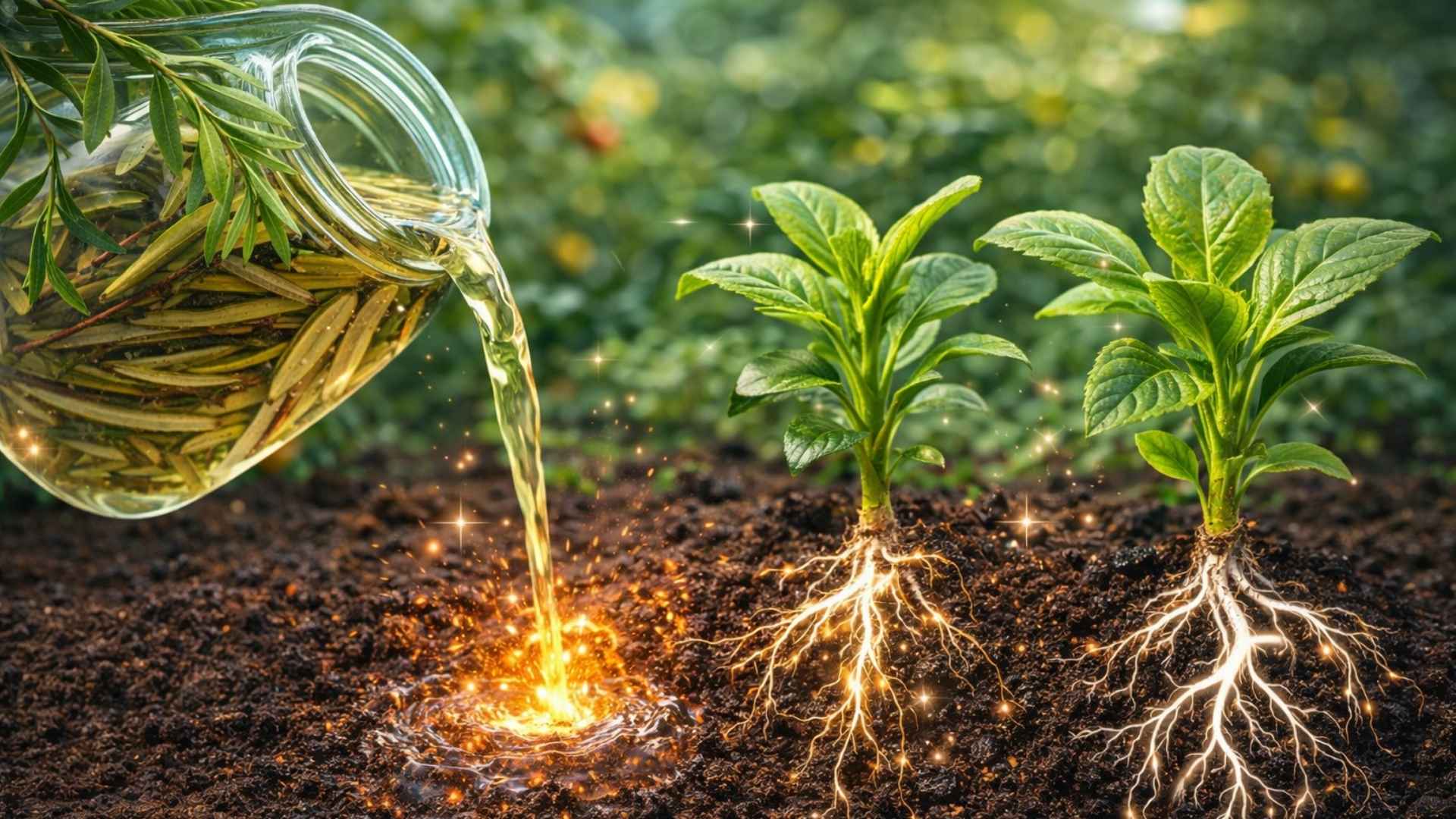
This isn't folklore; it's chemistry. Willow trees (Salix species) are packed with two powerful natural compounds: Indolebutyric Acid (IBA) and Salicylic Acid (SA). When extracted into a simple "tea," this liquid acts as a high-octane fuel for new root development.
The Science Behind the Magic
Why does this work so effectively?
- Indolebutyric Acid (IBA): This is a plant hormone (auxin) that explicitly signals plant cells to differentiate into root tissue. It is the exact same ingredient found in commercial rooting powders, but here it is in a bio-available, natural form.
- Salicylic Acid (SA): As mentioned in other contexts, this compound triggers the plant's defense mechanism. In cuttings, it prevents bacteria and fungi from infecting the open wound of the cut stem, giving the cutting a clean, healthy chance to strike roots.
How to Make Your Own Rooting Accelerator
You can make a batch of this biological rooting agent for free.
Ingredients:
- Young, green twigs from any willow tree (Weeping Willow works great).
- Water.
The "Cold Soak" Method (Best Quality):
- Collect a handful of fresh, green willow twigs (about pencil thickness).
- Remove the leaves and cut the twigs into 1-inch (2-3 cm) pieces.
- Place the pieces in a jar and cover with water.
- Let it sit for 24-48 hours.
- Strain the liquid. It is now ready to use.
The "Boiled" Method (Fastest):
- Place the chopped twigs in a pot and cover with water.
- Bring to a boil, then turn off the heat and let it steep overnight like tea.
- Strain and use once cool.
How to Use Willow Water
There are two ways to apply this "rocket fuel" to your cuttings.
Method A: The Overnight Soak Place the cut ends of your fresh cuttings into a cup of Willow Water for 24 hours before moving them to soil. This saturates the stem with hormones.
Method B: Watering In Plant your cuttings in soil or potting mix, then water them deeply with the Willow Water. Repeat this watering twice a week for the first two weeks.
Comparison: Willow Water vs. Tap Water
| Feature | Tap Water | Willow Water |
|---|---|---|
| Rooting Speed | Slow (2-4 weeks) | fast (5-10 days) |
| Success Rate | 50-60% | 90%+ |
| Fungal Protection | None | High (Salicylic Acid) |
| Cost | Free | Free |
What Plants Does This Work On?
This technique is biological, meaning it works on almost everything.
- Softwood cuttings: Tomatoes (suckers), Coleus, Basil, Peppers.
- Hardwood cuttings: Roses, Hydrangeas, Fig trees, Berry bushes.
- Houseplants: Pothos, Monstera, Ficus.
Conclusion
Nature often holds the patent on the best inventions. By extracting the natural hormones from the willow tree, you can bypass synthetic chemicals and enjoy a propagation success rate that rivals professional greenhouses. Next time you prune a willow, don't throw the twigs away—turn them into liquid gold for your garden.
FAQ – Willow Water Rooting Secrets
1. Can I use any type of willow tree? Yes, all Salix species contain these compounds, though Weeping Willow and Pussy Willow are among the most potent.
2. How long does Willow Water keep? It is best used fresh. If kept in a sealed jar in the refrigerator, it can last for up to 2 months.
3. Is this better than rooting powder? It is often comparable or better because the salicylic acid adds fungal protection that most powders lack.
4. Can I water established plants with it? Yes, it can help established plants recover from transplant shock or root damage.
5. How do I know if it's working? You will see new top growth on your cuttings much sooner, which is a sign that roots have established below.
6. Can I use dried willow branches? No, the hormones are most active in fresh, green, growing wood. Old dead branches have very little potency.
7. Dose it work on water propagation? Yes! Instead of plain water in your propagation vessel, use a mix of 50% Willow Water and 50% fresh water.
8. Is it safe for edible plants? Absolutely. It is 100% natural and safe for vegetables, herbs, and fruits.
9. Can I overdose my plants? It is very mild compared to synthetics, so overdose is extremely unlikely. Use freely.
10. Why is my water cloudy? That is normal; it is the sap and compounds leaching out. If it smells rotten, discard it, but a tea-like smell is fine.
Discussion (0)
No comments yet. Be the first to start the conversation!
Leave a Reply