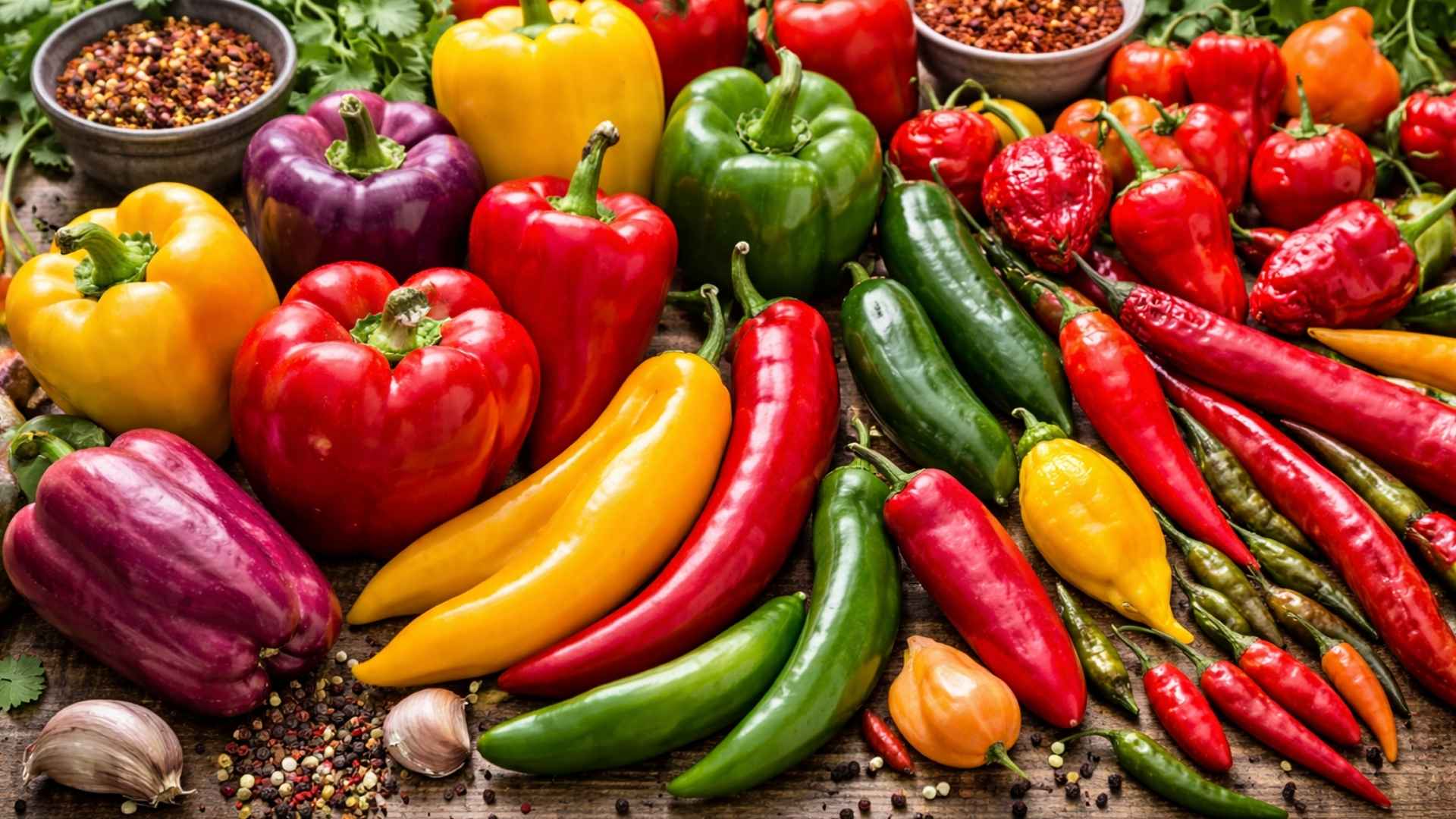
Choosing the right pepper variety is one of the most important decisions a grower can make. Peppers differ not only in heat level, but also in growth habit, fruit shape, color, culinary use, and climate adaptability. What performs perfectly in one region may fail in another if the variety is mismatched.
This article is designed as the most extensive pepper variety database presented in article form, covering both sweet and hot peppers from around the world. Each variety is listed with a short, practical description focused on real growing and culinary characteristics rather than marketing claims.
Sweet Pepper Varieties (No Heat, Maximum Versatility)
Sweet peppers are prized for their thick flesh, balanced flavor, and wide culinary use. They are commonly eaten raw, stuffed, roasted, grilled, or preserved. These varieties contain little to no capsaicin and are suitable for all diets.
Below is an extensive list of sweet pepper cultivars grown globally.
Sweet Peppers – Complete Variety List
- California Wonder – Classic block-shaped pepper with thick walls and reliable yields, ideal for stuffing and fresh use.
- Roberta F1 – Strong-growing field variety with uniform, large fruits and high tolerance to weather stress.
- Bell Boy – Early-maturing bell pepper producing medium-sized green-to-red fruits.
- Yolo Wonder – Disease-resistant bell pepper known for stable harvests and dense flesh.
- Red Knight F1 – Hybrid producing large, glossy red peppers with excellent shelf life.
- Yellow Bell – Sweet, golden-yellow fruits with mild flavor and crisp texture.
- Orange Sun – Bright orange peppers rich in sugars and carotenoids.
- Purple Beauty – Decorative purple fruits that turn red at full maturity.
- King of the North – Cold-tolerant variety suitable for cooler climates.
- Sweet Banana – Long, tapered yellow fruits with mild sweetness, ideal for pickling.
- Corno di Toro Rosso – Italian bull-horn pepper with elongated shape and intense sweetness.
- Corno di Toro Giallo – Yellow version of the classic Italian frying pepper.
- Marconi Red – Thin-walled, sweet pepper perfect for roasting and grilling.
- Marconi Purple – Aromatic frying pepper with purple skin and rich flavor.
- Cubanelle – Light green, thin-skinned pepper widely used in Mediterranean cooking.
- Gypsy F1 – Early hybrid producing pale yellow fruits with mild sweetness.
- Ramiro Red – Long, pointed pepper with very sweet flesh and high sugar content.
- Ramiro Yellow – Yellow-fruited Ramiro type with identical growth habit.
- Lamuyo – Thick-walled Spanish pepper used extensively in roasting dishes.
- Palermo F1 – Sweet, elongated pepper with excellent aroma and high yield potential.
- Pimento – Heart-shaped pepper traditionally used for pimentos and spreads.
- Shepherd’s Ramshorn – Curved, elongated fruits with rich flavor, popular in Balkan cuisine.
- Chocolate Bell – Brown-red mature color with deep, slightly smoky sweetness.
Hot Pepper Varieties (From Mild Heat to Extreme Fire)
Hot peppers contain capsaicin, the compound responsible for pungency. Heat levels vary dramatically, measured using the Scoville Heat Unit (SHU) scale. These peppers are used fresh, dried, fermented, or processed into sauces and powders.
This section includes peppers ranging from mildly spicy to some of the hottest cultivars ever recorded.
Mild to Medium Hot Peppers (500 – 10,000 SHU)
These varieties provide gentle warmth without overpowering dishes.
- Jalapeño – Thick-walled, moderately hot pepper widely used fresh and pickled.
- Fresno – Similar to jalapeño but slightly fruitier and hotter.
- Hungarian Wax – Yellow, elongated pepper with mild heat and fast growth.
- Anaheim – Mild chili ideal for roasting and stuffing.
- Poblano – Large, dark green pepper used in classic Mexican dishes.
- Pasilla Bajio – Dried form of poblano with deep, smoky flavor.
- Santa Fe Grande – Cone-shaped pepper with citrus undertones.
- Peppadew – Sweet-hot pepper with thick walls, often pickled.
Hot Peppers (10,000 – 100,000 SHU)
Noticeably spicy peppers suitable for sauces and cooking.
- Cayenne – Thin, elongated pepper commonly dried and ground into powder.
- Serrano – Crisp, hot pepper with clean heat and compact growth.
- Aji Amarillo – Fruity Peruvian pepper essential for South American cuisine.
- Aji Lemon Drop – Bright yellow pepper with citrus aroma and sharp heat.
- Thai Bird’s Eye – Small but fiery pepper used in Asian cooking.
- Bulgarian Carrot – Orange pepper with carrot-like shape and fruity spice.
- Fish Pepper – Variegated foliage and medium heat, historically used in seafood dishes.
Very Hot Peppers (100,000 – 350,000 SHU)
For experienced growers and heat enthusiasts.
- Habanero – Lantern-shaped pepper with intense heat and tropical fruit notes.
- Scotch Bonnet – Caribbean variety similar to habanero but sweeter.
- Red Savina – Once the hottest pepper in the world, extremely pungent.
- Fatalii – African-origin pepper with sharp, citrus-driven heat.
- Aji Habanero – Cross-type combining habanero heat with Aji flavor.
Super-Hot Peppers (350,000+ SHU)
Extreme varieties grown for sauces, powders, and competitive heat levels.
- Bhut Jolokia (Ghost Pepper) – One of the first peppers to exceed one million SHU.
- Trinidad Scorpion – Aggressive heat with delayed onset.
- 7 Pot Douglah – Chocolate-colored super-hot with deep, earthy flavor.
- Carolina Reaper – Officially one of the hottest peppers ever measured.
- Pepper X – Experimental cultivar bred for extreme capsaicin concentration.
How to Choose the Right Pepper Variety
Selecting the right pepper depends on:
- climate and growing season length,
- intended culinary use,
- tolerance for heat,
- space and container size.
Sweet peppers reward growers with versatility and volume, while hot peppers offer intensity and specialization. Understanding the category before planting ensures stronger plants and better harvests.
Help Us Grow the Largest Pepper Variety List Online
Even the most extensive pepper database is never truly complete. Around the world, gardeners grow local cultivars, old heirloom varieties, rare hybrids, and regional favorites that are often missing from mainstream lists.
If you grow a pepper variety that:
- performs exceptionally well in your climate,
- has unique flavor, color, or shape,
- is hard to find in commercial catalogs,
- or simply deserves more recognition,
we invite you to share its name and a short description in the comments.
Community recommendations help expand this list into a living, global reference created by real growers. Each added variety increases the value of this article for future readers who are searching for proven, experience-based choices rather than marketing claims.
If it grows well in your garden, others deserve to know about it.
FAQ – Pepper Varieties Explained
1. Are sweet peppers and hot peppers the same species?
Yes, most belong to the Capsicum annuum or related species, differing mainly in capsaicin production.
2. Which pepper variety is easiest for beginners?
Sweet bell peppers and jalapeños are among the most forgiving.
3. Can hot and sweet peppers cross-pollinate?
Yes, but the heat affects seeds, not the current fruit.
4. Which peppers are best for containers?
Compact varieties like jalapeño, Thai chili, and dwarf bells perform well in pots.
5. Are purple peppers naturally purple?
Yes, due to anthocyanin pigments; many turn red when fully ripe.
6. Which peppers are best for sauces?
Cayenne, habanero, and super-hots are commonly used.
7. Do hotter peppers need more heat to grow?
Generally yes, they prefer warmer and longer seasons.
8. Can peppers be grown indoors?
Yes, with strong light and proper temperature control.
9. What determines pepper heat level?
Genetics and growing conditions influence capsaicin content.
10. Are all peppers edible?
Yes, but extreme varieties require careful handling.
Discussion (0)
No comments yet. Be the first to start the conversation!
Leave a Reply