It is the question every gardener asks while chopping vegetables for a salad: "Can I just plant these seeds instead of buying a packet for $4?"
The short answer is: YES.
The long answer is that while it is entirely possible, there are specific rules you must follow to avoid disappointment. Supermarket peppers are often hybrids, harvested unripe, or treated for storage. However, with the right technique, you can turn a single $1 bell pepper into 50+ plants.
Here is the complete, expert guide to cloning your grocery store favorites.
The Hybrid Problem: What You Need to Know
Most commercial peppers are F1 Hybrids. This means they are the "child" of two different parent varieties crossed to create the perfect fruit. When you plant seed from an F1 Hybrid, the "grandchild" might not look exactly like the fruit you bought.
- Best Case: It is almost identical (90% chance with peppers).
- Worst Case: The fruit is slightly smaller or a different shape.
- Bottom Line: For a home gardener, it rarely matters. The peppers will still be edible and delicious.
Step 1: Choosing the Right Fruit
Not all store peppers are equal.
- USE Red, Yellow, or Orange Peppers: These are fully ripe. The seeds have matured and have a high germination rate (near 95%).
- AVOID Green Peppers: Green peppers are unripe. Their seeds are often white, undeveloped, and will not sprout.
Step 2: Extracting and Drying
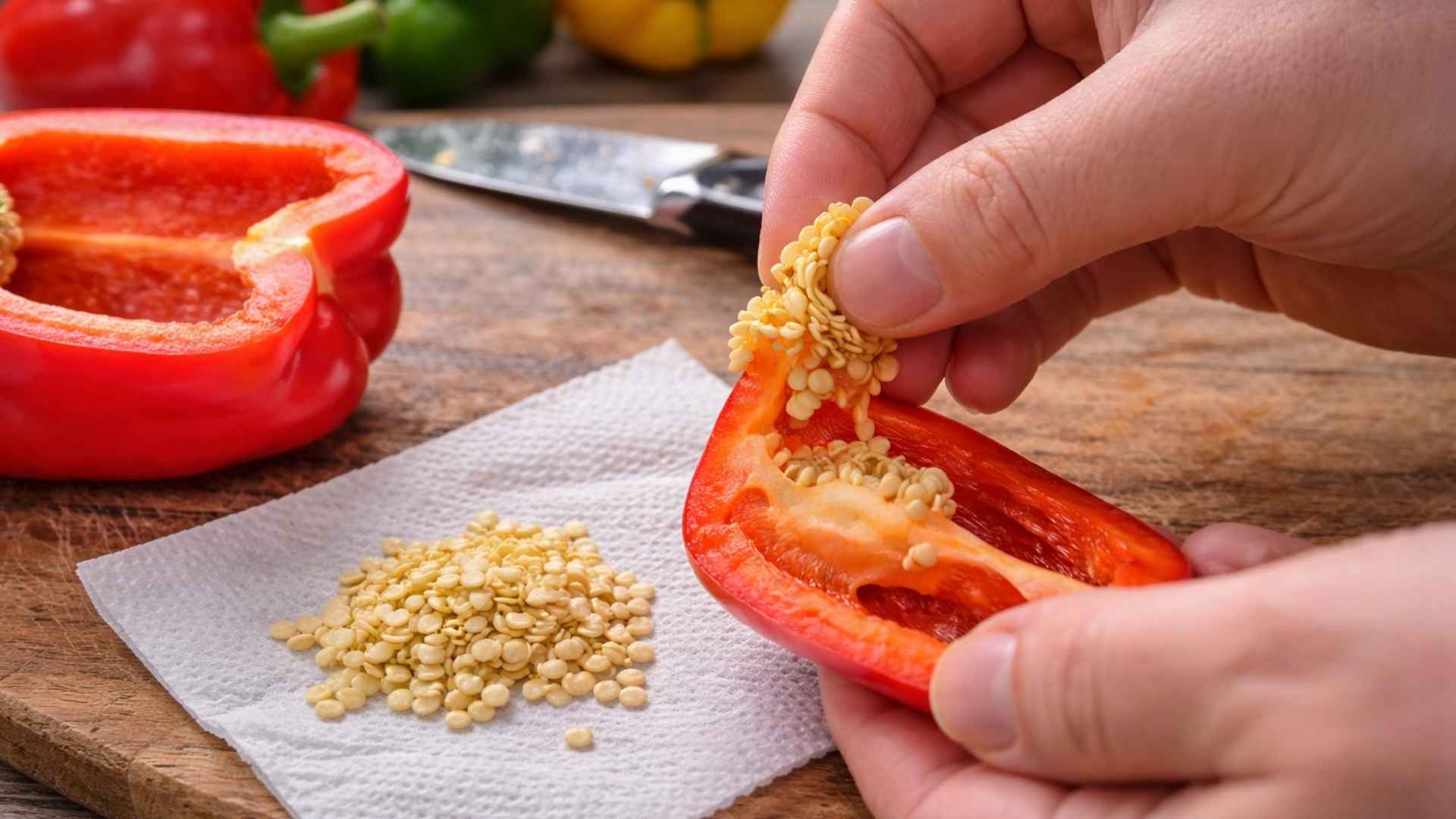
- Cut the pepper open carefully to avoid slicing the seed core.
- Scrape the seeds onto a paper towel.
- The Float Test (Optional): Drop seeds in a cup of water. Heavy, viable seeds sink; dead, empty seeds float. Throw away the floaters.
- Drying: Spread the good seeds on a paper towel or plate. Let them dry for 3-5 days in a warm, airy room. Do not apply heat!
Step 3: Sowing for Success
Peppers are tropical plants. They need heat.
- Soil: Use a sterile seed-starting mix. Do not use garden soil (it is too heavy and contains fungus).
- Depth: Plant seeds roughly 1/4 inch (0.5 cm) deep.
- Temperature: This is critical. Pepper seeds dormant below 20°C (68°F). Place the pot on a heat mat or a warm radiator. Ideally, keep cultivation at 25-28°C (77-82°F).
- Moisture: Cover the pot with plastic wrap to create a mini-greenhouse until sprouts appear (usually 7-14 days).
Step 4: The Grow-Out Phase
Once they sprout, remove the plastic immediately and place them under strong light. A sunny windowsill is okay, but a grow light prevents "legginess."
- Repotting: When they have 2 sets of true leaves, transplant them into larger pots deep—bury the stem up to the leaves to encourage more roots.
Fertilization Schedule
Store seeds produce rigorous plants, but they are hungry.
- Seedling Stage: Use half-strength nitrogen fertilizer (like fish emulsion) once a week.
- Flowering Stage: Switch to a high-potassium feed (tomato fertilizer) to encourage fruit set.
- Magnesium Boost: Peppers love magnesium. Spray diluted Epsom salts (1 tsp per liter) on leaves once a month for lush green foliage.
5 Pro Tips for Huge Yields
- Pinch the Top: When the plant is 6 inches tall, cut off the growing tip. This forces the plant to bush out and create 4-4 main stems instead of one, doubling your harvest.
- Pollinate by Hand: Peppers self-pollinate, but indoors or in greenhouses, they need help. Shake the plant gently every day when flowers open.
- Remove the "King Pepper": The precise first flower/fruit that forms in the center fork of the plant should be pulled off. If you leave it, the plant puts all energy into that one fruit and stops growing. Removing it forces the plant to grow bigger and produce 20 more fruits later.
- Warm Feet: Peppers hate cold soil. Don't plant them outside until night temperatures are consistently above 12°C (55°F).
- Calcium is Key: To prevent Blossom End Rot (black spots on fruit bottoms), ensure your soil has calcium. Crushed eggshells in the planting hole work wonders.
FAQ – Growing Supermarket Seeds
1. Will the peppers taste the same? Usually, yes. Even if the shape varies slightly due to hybrid genetics, the flavor profile remains very similar to the parent.
2. Can I grow spicy chilies this way? Absolutely. Jalapeños, Habaneros, and Thai chilies from the store grow even easier than Bell Peppers.
3. Why are my seeds not germinating? Did you use a green pepper? Or is the room too cold? Pepper seeds will sit dormant for weeks if the temperature is below 22°C.
4. Can I plant fresh undried seeds? Yes, you can plant them "wet" straight from the fruit. Drying is only necessary if you want to store them for next year.
5. How long do harvested seeds last? If dried properly and stored in a cool, dark place, pepper seeds remain viable for 3-4 years.
6. Is it illegal to propagate store seeds? Technically, some commercial varieties are patented (PVP). However, for home use in your own backyard, nobody is going to stop you. Just don't sell the seeds.
7. Why do my plants have flowers but no fruit? Lack of pollination or temperature stress. If it is too hot (>32°C) or too cold (<10°C), peppers drop their flowers.
8. Do peppers need full sun? Yes, they crave it. Give them at least 6-8 hours of direct, baking sunlight per day.
9. Can I bring the plant inside for winter? Yes! Peppers are perennials. You can trim them back and keep them as houseplants over winter, then put them back out next spring.
10. How many peppers will one plant produce? A healthy Bell Pepper plant yields 6-10 large fruits. Hot pepper varieties can produce 50-100 chilies per plant.
Discussion (0)
No comments yet. Be the first to start the conversation!
Leave a Reply