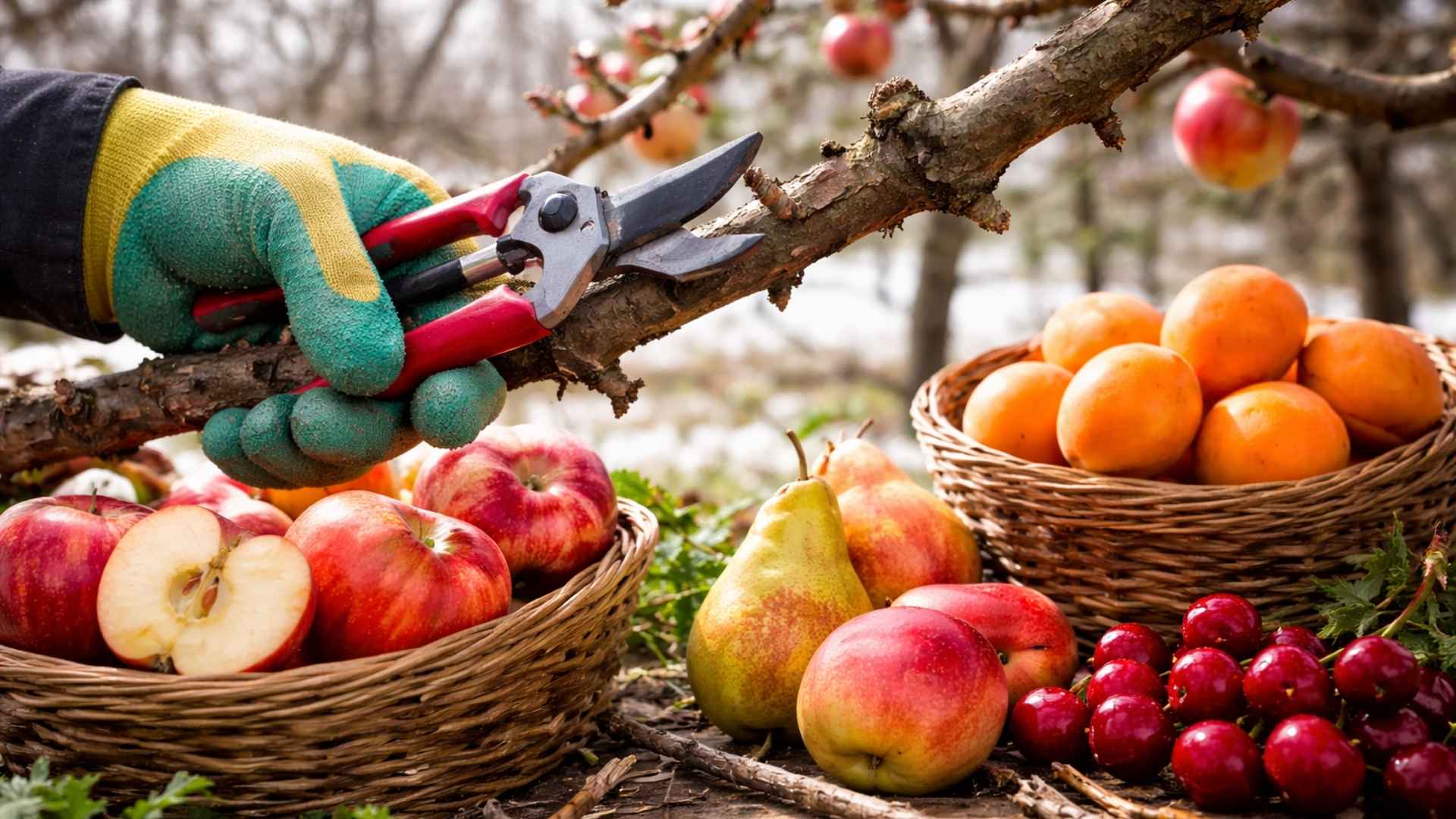
For many gardeners, January feels like a quiet month. The garden sleeps, trees stand bare, and it’s tempting to wait for spring before touching pruners.
That’s a mistake.
January pruning is one of the most effective, low-effort actions you can take to improve flowering, fruit set, and long-term tree health. When done correctly, it shapes the tree’s future before growth even begins.
This is not about aggressive cutting. It’s about timing.
Why January Is a Strategic Moment for Pruning Fruit Trees
In mid-winter, fruit trees are in deep dormancy. Sap flow is minimal, buds are inactive, and the tree’s energy is stored safely in roots and woody tissue.
Pruning at this stage:
- causes minimal stress,
- allows cuts to heal cleanly before spring,
- redirects stored energy into fewer, stronger buds,
- improves light penetration before leaf-out.
In simple terms:
the tree wakes up already shaped for success.
What January Pruning Actually Does (Physiology Explained Simply)
When you remove selected branches in winter, the tree responds in spring by:
- producing stronger shoots where light and space are available,
- forming better-quality flower buds instead of excessive wood growth,
- reducing internal shading that limits fruit development.
This is why well-pruned trees often bloom more evenly and set fruit more reliably than untouched ones.
Apple Trees – The Biggest Winners of January Pruning
Apple trees respond exceptionally well to winter pruning.
January cuts help to:
- open the canopy and improve airflow,
- reduce overcrowded spurs,
- balance vegetative growth with fruiting wood.
Apple trees pruned in winter tend to produce larger, better-colored fruit and fewer disease problems later in the season.
This is especially important for older trees that have become dense over the years.
Pear Trees – Shaping Strength and Structure Early
Pear trees are naturally vigorous and upright. Left unpruned, they often grow tall and unmanageable.
January pruning allows you to:
- control height and structure,
- remove vertical, non-productive shoots,
- encourage more horizontal fruiting branches.
Winter pruning also reduces the risk of breakage under heavy fruit loads later in the year.
Cherries and Sour Cherries – When to Be Careful (But Not Afraid)
Cherries are often labeled “sensitive,” which causes many gardeners to avoid winter pruning entirely.
The truth is more nuanced.
In January, you can safely:
- remove dead, damaged, or crossing branches,
- lightly thin overcrowded areas,
- improve overall structure without heavy cuts.
Avoid aggressive pruning, but strategic, light winter cuts help prevent disease pressure and improve fruit access to light.
Apricots and Nectarines – Winter Pruning Sets the Stage
Apricots and nectarines flower early and fruit on young wood. January pruning helps by:
- removing weak or poorly placed shoots,
- improving sunlight exposure for flower buds,
- reducing competition between branches.
This preparation is especially valuable in climates with unpredictable springs, where the tree must use its energy efficiently.
What to Remove During January Pruning
Focus on quality, not quantity. In winter, less is often more.
Remove:
- dead or diseased branches,
- branches growing inward,
- crossing or rubbing shoots,
- weak, thin growth unlikely to support fruit.
Keep:
- well-spaced, outward-facing branches,
- healthy fruiting wood,
- a clear central structure.
If you hesitate between two branches, remove the weaker one.
Common Myths About Winter Pruning
“Winter pruning weakens trees.”
Done correctly, it strengthens them.
“Spring pruning is safer.”
Spring pruning often removes energy the tree has already invested.
“Fruit trees should only be pruned after flowering.”
That approach limits structure control and often leads to shading problems.
Tools and Conditions Matter
January pruning should be done:
- on dry days,
- above severe frost thresholds,
- with clean, sharp tools.
Avoid pruning during extreme cold snaps. Moderate winter days are ideal.
The Long-Term Payoff
Fruit trees pruned regularly in winter:
- live longer,
- suffer fewer diseases,
- produce more consistent crops,
- are easier to manage year after year.
This is not a one-season trick.
It’s a habit that compounds benefits over time.
FAQ – January Pruning of Fruit Trees
1. Is January really safe for pruning fruit trees?
Yes, as long as temperatures are not extremely low and cuts are clean.
2. Which fruit trees benefit most from January pruning?
Apple and pear trees respond particularly well, but cherries, apricots, and nectarines also benefit when pruned lightly.
3. Can winter pruning increase fruit yield?
Indirectly, yes. It improves light access and energy distribution, which supports better flowering and fruiting.
4. Should young fruit trees be pruned in January?
Yes, especially for shaping structure and removing poorly positioned shoots.
5. Can I prune all branches in winter?
No. Avoid heavy cuts on sensitive species; focus on structure and health.
6. What happens if I skip winter pruning?
Trees often become dense, shaded, and less productive over time.
7. Does winter pruning increase disease risk?
No. Disease pressure is lower in winter compared to warm, wet seasons.
8. Should I seal pruning cuts?
Generally no. Clean cuts heal naturally.
9. How much should I prune in January?
Aim for selective thinning, not drastic reduction.
10. Is winter pruning better than summer pruning?
They serve different purposes. Winter pruning shapes structure; summer pruning controls vigor.
Discussion (0)
No comments yet. Be the first to start the conversation!
Leave a Reply