Growing hot peppers is no longer just about heat. In recent years, chili cultivation has evolved into a conscious choice of flavor profiles, plant behavior, yield stability, and adaptability—whether you grow in open ground, a greenhouse, or a container on a balcony.
After many seasons of growing hot peppers side by side, one thing is clear: variety selection decides 70% of your success. Some peppers reward patience with explosive heat, others shine in sauces or drying, and some are perfect daily drivers for cooking and fresh use.
This guide brings together globally popular and proven hot pepper varieties—from mild and beginner-friendly to legendary super-hots—based on real cultivation performance, not catalog hype.
Can You Sow Hot Peppers in January or February?
Yes—and experienced growers increasingly do exactly that.
Hot peppers, especially medium and super-hot varieties, have a long growing cycle. Starting seeds in January or early February gives plants enough time to:
- build a strong root system,
- develop thick stems and compact growth,
- flower and set fruit as soon as outdoor conditions allow.
You do not need a greenhouse to start early. A simple setup is enough:
- stable indoor warmth,
- basic LED grow light,
- patience during early development.
The biggest limitation in winter is light, not temperature. Modern LED lights make early sowing practical and efficient. With proper lighting, seedlings stay compact and healthy instead of stretching.
Early sowing means earlier harvests, larger plants, and higher yields by mid-season.
Why Hot Peppers Sometimes Disappoint
Most failures are not caused by the variety itself, but by stress factors that peppers are particularly sensitive to:
- low night temperatures,
- excess nitrogen during flowering,
- irregular watering,
- insufficient light,
- containers that are too small.
Super-hot peppers amplify these mistakes. They demand stability more than speed.
How to Maximize Yield and Heat
Hot peppers reward growers who focus on balance, not force.
Key principles:
- Temperature: 22–28°C (72–82°F) daytime, minimum 16°C (60°F) at night
- Light: full sun or strong artificial lighting
- Nutrition: reduced nitrogen during flowering, increased potassium and phosphorus
- Water: consistent moisture; mild water stress can increase heat
- Pollination: gentle shaking improves fruit set indoors
- Containers: minimum 7–10 L for standard varieties, 15–20 L for super-hots
Recommended Hot Pepper Varieties for 2026
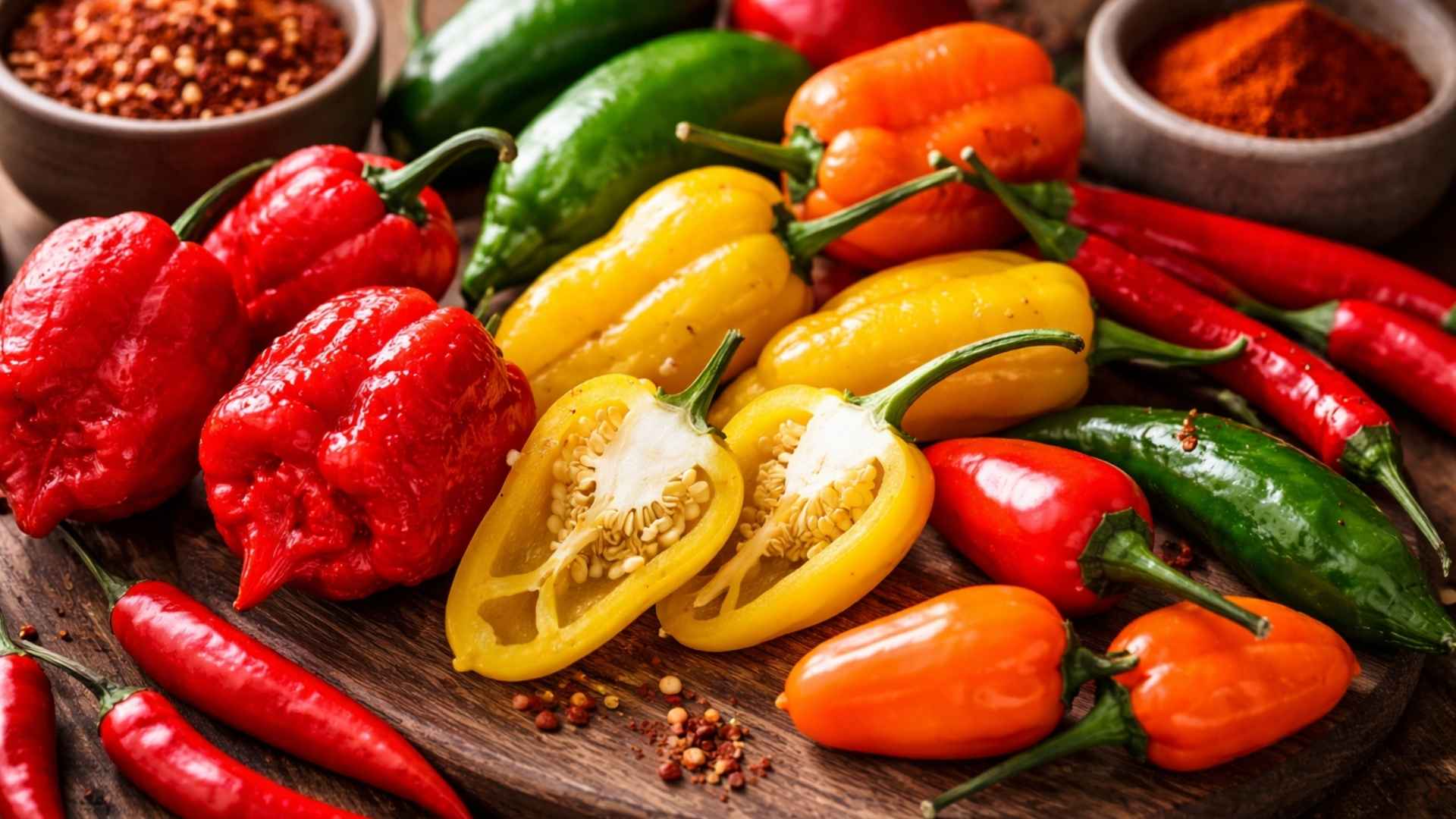
Below is a carefully selected list of internationally recognized and widely grown hot pepper varieties, suitable for home gardens and containers.
Mild to Medium Heat (Beginner-Friendly)
Jalapeño
Thick-walled, reliable, and versatile. Perfect for fresh use, stuffing, grilling, and pickling.
Anaheim Chili
Long, mild peppers ideal for roasting and frying. High yields and forgiving growth habit.
Poblano
Deep flavor with mild heat. Excellent for cooking and drying into ancho chili.
Medium to Hot (Everyday Heat with Character)
Cayenne
A classic. Slender pods, steady heat, excellent for drying and chili powder.
Serrano
Crisp texture and clean heat. A staple for salsas and fresh sauces.
Lemon Drop (Aji Limón)
Bright citrus aroma with moderate heat. Outstanding for salsas and drying.
Hot to Very Hot (Flavor-Driven Heat)
Habanero (Orange / Red)
Tropical, fruity heat with strong aroma. Excellent for sauces and fermentation.
Scotch Bonnet
Similar heat to habanero but with a distinct Caribbean flavor profile. Essential for jerk and island-style sauces.
Fatalii
Sharp, citrus-forward heat. Fast-growing compared to other hot varieties.
Super-Hot (For Experienced Growers)
Bhut Jolokia (Ghost Pepper)
Smoky, intense heat with long ripening time. Demands warmth and patience.
Trinidad Moruga Scorpion
Extreme heat and deep flavor. Requires large containers and stable conditions.
Carolina Reaper
Among the hottest peppers in the world. Grown for sauces, powders, and pure challenge.
Comparison Table – Hot Pepper Varieties 2026
Tabela: Recommended hot pepper varieties – overview
| Variety | Heat Level | Flavor Profile | Best Growing Method | Main Use |
|---|---|---|---|---|
| Jalapeño | Mild–Medium | Fresh, green | Ground / Container | Stuffing, pickling |
| Anaheim | Mild | Sweet, roasted | Ground | Cooking, grilling |
| Cayenne | Medium | Neutral | Ground / Container | Powder, flakes |
| Serrano | Medium–Hot | Crisp | Ground | Fresh salsas |
| Lemon Drop | Medium | Citrus | Ground | Salsas, drying |
| Habanero | Very Hot | Fruity | Ground / Container | Sauces |
| Scotch Bonnet | Very Hot | Caribbean | Ground | Jerk, sauces |
| Bhut Jolokia (Ghost Pepper) | Extreme | Smoky | Large container | Super-hot sauces |
| Trinidad Moruga Scorpion | Extreme | Deep, rich | Large container | Extreme sauces |
| Carolina Reaper | Extreme | Fruity–smoky | Large container | Specialty use |
Choosing the Right Pepper for Your Space
- Small spaces / balconies: Jalapeño, Cayenne, Lemon Drop
- Sauce makers: Habanero, Scotch Bonnet, Fatalii
- Collectors and heat seekers: Bhut Jolokia, Moruga Scorpion, Carolina Reaper
- Beginners: Anaheim, Jalapeño, Poblano
Growing fewer varieties well almost always beats growing many poorly.
FAQ – Hot Pepper Growing
1. Which hot pepper is the hottest?
Carolina Reaper and Trinidad Moruga Scorpion rank among the hottest.
2. Can super-hot peppers be grown in containers?
Yes, but they require large pots (15–20 L) and stable warmth.
3. How can I increase pepper heat?
More sun, potassium-rich feeding, and mild water stress.
4. Why do flowers drop?
Usually low night temperatures or excess nitrogen.
5. Are hot peppers suitable for beginners?
Yes—milder varieties like Jalapeño and Anaheim are very forgiving.
6. When should I sow hot peppers?
January to February for best results.
7. Does drying reduce heat?
Slightly, but flavor concentration usually increases.
8. How do I prevent fungal diseases?
Good airflow, moderate watering, and dry leaves.
9. Do organic seeds yield less?
No. With proper care, yields are comparable or better.
10. Can I grow different heat levels together?
Yes, but keep spacing and nutrition consistent.
Discussion (0)
No comments yet. Be the first to start the conversation!
Leave a Reply