Growing tomatoes in 2026 is no longer just about following a basic checklist. Weather patterns are less predictable, summers are hotter, humidity fluctuates, and soil fatigue is increasingly common in home gardens. The gardeners who succeed are not those who use more products—but those who understand how tomato plants actually function.
This guide is written from practical experience, not recycled advice. It connects plant physiology, soil biology, nutrition, and seasonal timing into one coherent system. If you want healthier plants, fewer problems, and a heavier harvest, start here.
Build the Root System First
Tomato plants are unique because they can produce roots along buried stems. This trait should be used intentionally.
Planting tomatoes deeper:
- creates a wider and stronger root network,
- improves water and nutrient uptake,
- increases drought tolerance,
- stabilizes growth during heat stress.
Always remove lower leaves and bury part of the stem when planting. A tomato with strong roots rarely struggles later—even in difficult seasons.
Correct Spacing Is a Yield Strategy
Crowded tomatoes may look productive early, but they fail later due to poor airflow and disease pressure.
Proper spacing:
- keeps foliage dry,
- limits fungal spread,
- allows light to reach inner leaves,
- extends the productive lifespan of the plant.
Airflow is one of the most underestimated yield factors in tomato growing.
Mulching for Stability, Not Convenience
Mulch is not just for weed control—it is a soil management tool.
A stable mulch layer:
- prevents sudden moisture changes,
- buffers soil temperature,
- protects surface roots,
- feeds soil microorganisms gradually.
Tomatoes perform best when conditions remain steady. Mulch creates that stability.
Pruning with Purpose
Pruning is not about removing as much growth as possible—it is about balance.
Good pruning:
- removes leaves touching the soil,
- improves airflow,
- reduces disease risk,
- preserves enough foliage to fuel fruit development.
Over-pruning weakens plants and exposes fruit to sunscald. The goal is controlled structure, not minimal foliage.
Support Systems Prevent Energy Loss
Tomatoes are not built to sprawl under heavy fruit loads.
Proper support:
- prevents stem damage,
- keeps fruit clean,
- improves light exposure,
- reduces pest access.
Unsupported plants waste energy repairing damage instead of producing fruit.
Watering Consistency Beats Quantity
Tomatoes do not want extreme watering—they want predictability.
Best practices:
- water deeply at the base,
- avoid wetting leaves,
- maintain even moisture levels.
Inconsistent watering causes fruit cracking, calcium transport issues, and stress-induced yield loss.
Feeding Tomatoes the Smart Way
Early growth requires nitrogen, but only early. Excess nitrogen later results in lush leaves and poor flowering.
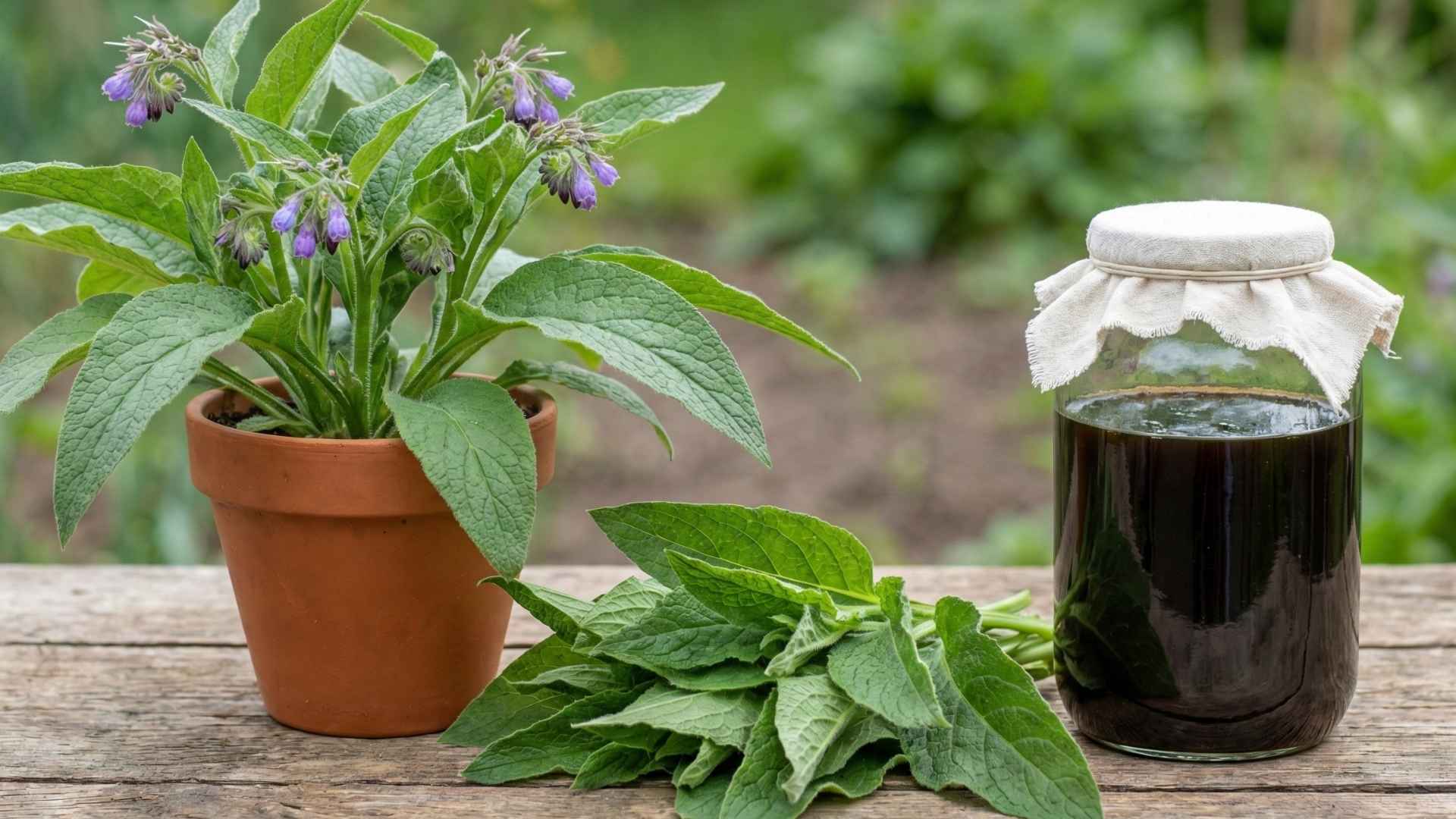
Natural nitrogen sources support early development without shocking plants. One of the most effective options is nettle-based fertilizer.
If you want a detailed explanation of nitrogen-driven growth and timing, see:
👉 Which fertilizer promotes plant growth
Once flowering begins, nutrition must shift toward potassium and balanced mineral uptake.
Magnesium, Calcium, and Stress Management
Many calcium and magnesium problems are caused by:
- uneven watering,
- compacted soil,
- root damage.
Supplements help only after stress factors are corrected. Nutrients cannot compensate for poor conditions.
Companion Plants as Support, Not Protection
Companion plants work indirectly by:
- confusing pests,
- improving biodiversity,
- reducing pressure—not eliminating it.
Healthy tomatoes resist pests better than stressed plants. Companion planting supports resilience, not immunity.
Variety Choice Is a Strategic Decision
No technique can overcome poor genetics.
In 2026, strong varieties must:
- tolerate heat,
- resist disease,
- set fruit under stress.
For a curated selection based on modern conditions, see:
👉 Tomato Varieties to Grow in 2026: The International Shortlist
Your variety choice determines how forgiving the season will be.
Tomato Growing Focus for 2026 – Summary Table
| Area | What Actually Matters |
|---|---|
| Roots | Deep planting, strong root zone |
| Spacing | Airflow and disease prevention |
| Mulch | Moisture and temperature stability |
| Pruning | Balance, not aggression |
| Watering | Consistency over volume |
| Feeding | Nitrogen early, potassium later |
| Support | Energy preservation |
| Varieties | Stress tolerance and reliability |
FAQ – Tomato Growing Expert Tips 2026
1. What is the most common mistake tomato growers make?
Overfeeding nitrogen late in the season.
2. Can tomatoes handle heat better in 2026?
Only if roots, water, and variety selection are optimized.
3. Should I prune aggressively?
No. Moderate pruning performs better under heat stress.
4. Is mulch always necessary?
Yes, especially in unstable weather patterns.
5. Do tomatoes need daily watering?
No. They need deep, regular watering—not frequency.
6. Why do flowers drop without setting fruit?
Heat stress, excess nitrogen, or inconsistent moisture.
7. Are natural fertilizers effective?
Yes, when timed correctly and applied consistently.
8. Should I grow fewer plants closer together?
No. Fewer plants with better airflow outperform dense plantings.
9. Is calcium deficiency always a soil issue?
Usually not—it’s often a water transport problem.
10. Can variety choice really improve yield?
Yes. Genetics define your ceiling before technique does.
Discussion (0)
No comments yet. Be the first to start the conversation!
Leave a Reply