Growing carrots successfully is often described as difficult, but in reality carrots fail for very specific, repeatable reasons. Poor soil structure, incorrect sowing depth, uneven moisture, and excessive fertilization are responsible for most disappointments. When these factors are controlled, carrots become one of the most rewarding crops to grow — even in small containers, crates, or raised beds, just like in the method shown in the referenced video.
This article presents a global, climate-flexible approach to growing carrots from seed, focused on simplicity, natural nutrition, and soil biology rather than synthetic shortcuts. The principles apply whether you grow carrots in a backyard garden, raised bed, balcony container, or improvised vegetable crate.
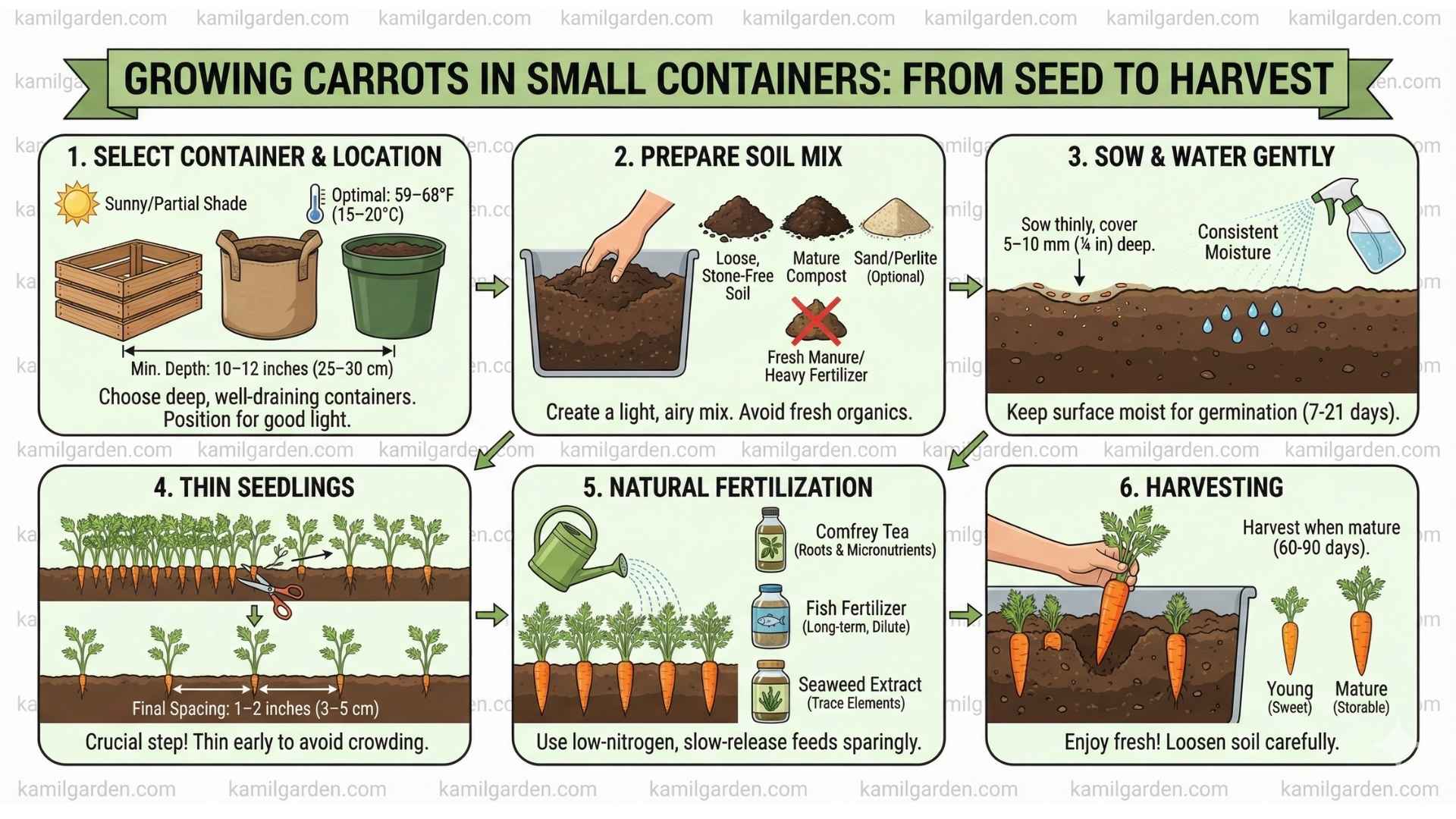
Why Carrots Grow Exceptionally Well in Containers and Raised Beds
Carrots are root crops, which means soil structure matters more than soil richness. Containers and raised beds allow full control over texture, depth, and drainage — three factors that determine root shape and size.
Advantages of growing carrots in containers or small beds:
- loose, stone-free soil encourages straight roots,
- consistent moisture is easier to maintain,
- fewer soil-borne pests,
- easy protection from heavy rain or crusting,
- excellent results even in limited space.
Depth matters more than width. A container or bed with at least 25–30 cm (10–12 inches) of loose soil is sufficient for most varieties.
Soil Preparation: The Most Important Step
Carrots do not tolerate compacted or freshly fertilized soil. Rich, nitrogen-heavy mixes produce lush tops and forked or stunted roots.
Ideal soil mix for carrots
- light garden soil or topsoil,
- mature compost (well decomposed),
- sand or fine mineral material for drainage (optional).
The soil should crumble easily in your hand. Remove stones, wood chunks, and undecomposed organic matter. Never plant carrots in freshly manured soil.
How to Sow Carrot Seeds Correctly
Carrot seeds are small and slow to germinate, which makes correct sowing critical.
Step-by-step sowing method
- Level and lightly firm the soil surface.
- Sow seeds thinly on the surface or in shallow lines.
- Cover with no more than 5–10 mm (¼ inch) of fine soil or compost.
- Gently water using a mist or fine spray.
- Keep the surface consistently moist until germination.
Germination can take 7–21 days, depending on temperature. Drying out at this stage is the most common reason for failure.
Ideal Temperature for Growing Carrots
Carrots are cool-season tolerant but germinate best in moderate conditions.
- Minimum soil temperature for germination: ~7°C (45°F)
- Optimal germination range: 10–25°C (50–77°F)
- Ideal growing temperature: 15–20°C (59–68°F)
In hot climates, sow carrots in partial shade or during cooler parts of the season. In cold regions, containers allow earlier sowing because soil warms faster.
Watering: Consistency Over Quantity
Carrots require even moisture, especially during early growth and root formation.
- Water lightly but frequently during germination.
- Once established, water deeply but less often.
- Avoid cycles of drought followed by heavy watering — this causes root splitting.
Mulching with a thin layer of compost or straw helps stabilize moisture and temperature.
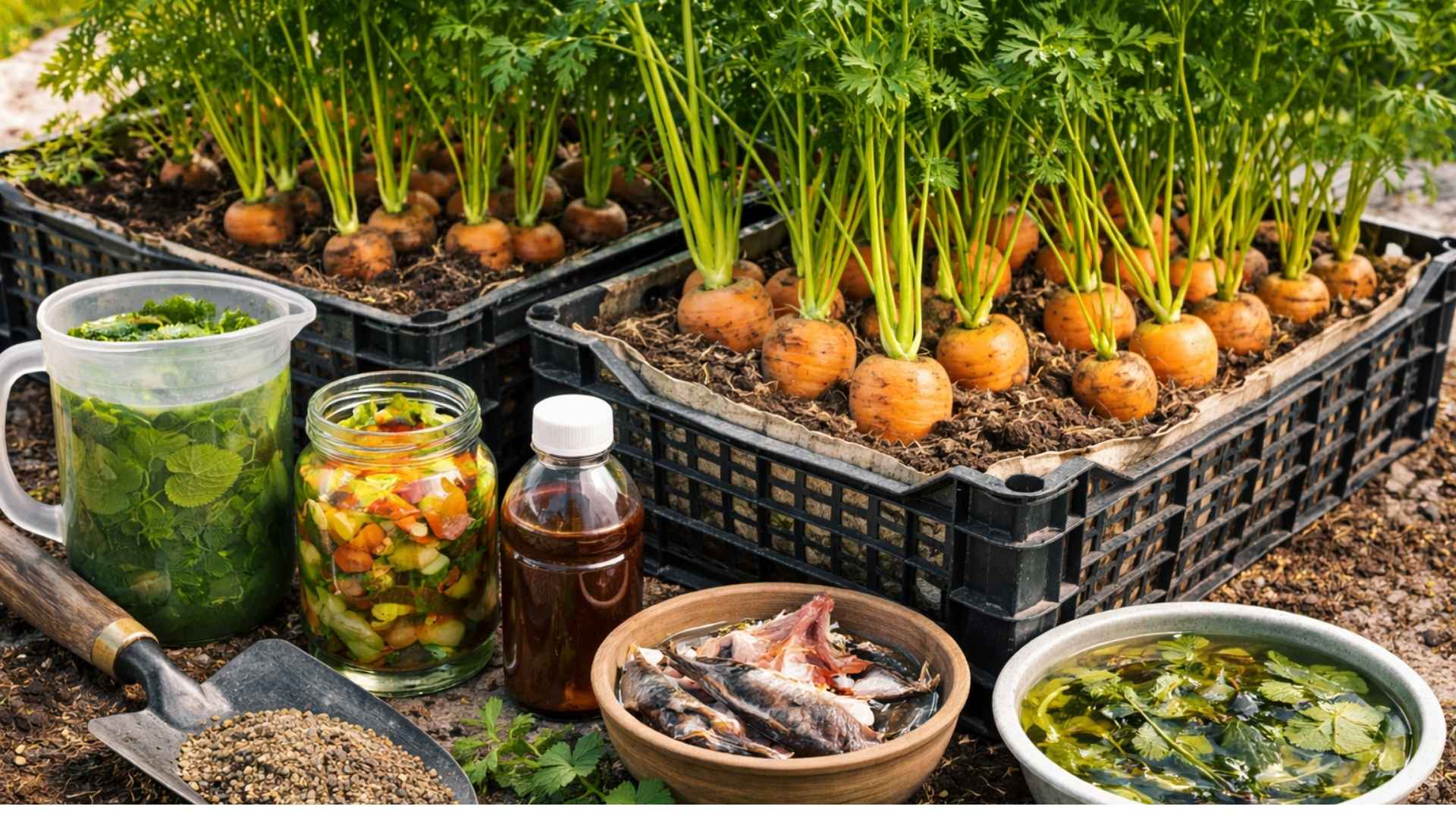
Natural Fertilization: Feeding Carrots the Right Way
Carrots prefer low-nitrogen, slow-release nutrition. Overfeeding is worse than underfeeding.
Nettle tea (nitrogen – use sparingly)
Best used early in growth to support leaf development.
- Use diluted (at least 1:10).
- Stop once roots begin thickening.
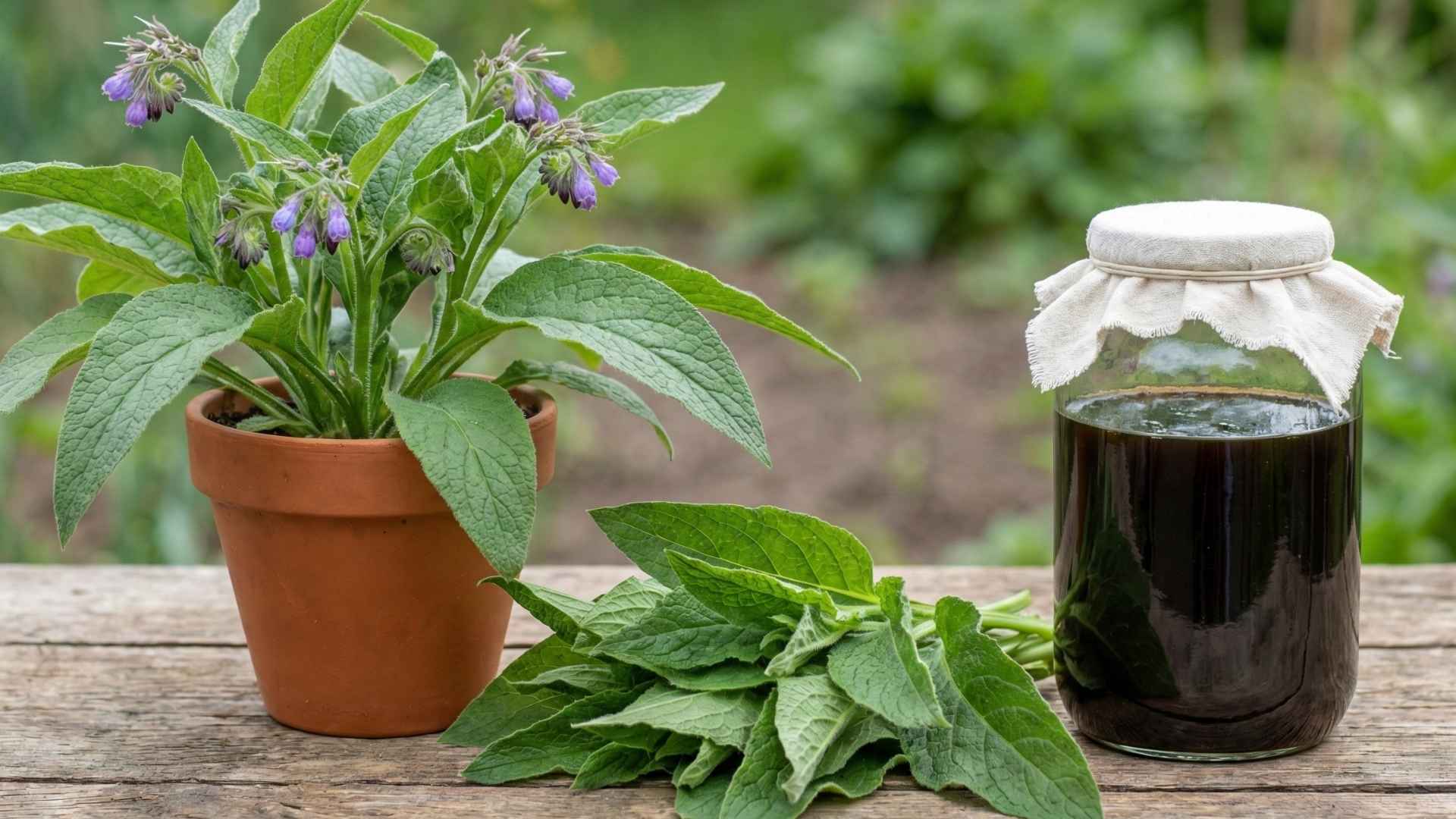
Comfrey tea (potassium and micronutrients)
Ideal during root development.
- Supports size, density, and flavor.
- Apply every 2–3 weeks in diluted form.
Seaweed fertilizer (trace elements)
Excellent for stress resistance and balanced growth.
- Use low concentration.
- Apply as soil drench or foliar spray.
Fish-based fertilizer (whole fish or scraps)
A powerful, long-term nutrient source.
- Bury fish remains deep beneath the soil before planting.
- Alternatively, place in a container of water to ferment lightly and dilute heavily.
- Provides phosphorus, calcium, and trace minerals.
Vegetable and fruit scraps soaked in water
A simple, slow-release method.
- Place scraps in a container, cover with water.
- Use the strained liquid diluted after several days.
- Nutrients release gradually, supporting steady growth.
Avoid strong odors by keeping applications diluted and infrequent.
Thinning: The Step You Cannot Skip
Carrots must be thinned to grow properly.
- First thinning when seedlings are 3–4 cm tall.
- Final spacing: 3–5 cm (1–2 inches) depending on variety.
- Remove seedlings by cutting at soil level to avoid disturbing neighbors.
Crowded carrots remain thin and misshapen.
Best Carrot Varieties for Containers and Small Beds
Some varieties perform better in controlled environments.
Reliable global varieties
- Nantes – straight, sweet, ideal for containers.
- Amsterdam Forcing – early, small, perfect for shallow beds.
- Chantenay – shorter roots, good for heavier soils.
- Paris Market – round carrots for very shallow containers.
- Danvers – adaptable and reliable in many climates.
Choose varieties based on container depth rather than popularity.
Harvesting: Timing for Best Flavor
Carrots can be harvested young or left to mature fully.
- Young carrots are sweeter and tender.
- Mature carrots store better and develop deeper flavor.
Loosen soil gently before pulling to avoid breakage. In containers, harvesting is especially easy.
Common Carrot Growing Mistakes
- sowing too deeply,
- letting soil dry during germination,
- using fresh manure or strong fertilizers,
- skipping thinning,
- compacted or stony soil,
- uneven watering.
Correcting these alone solves most carrot problems worldwide.
Table: Carrot Growing Basics at a Glance
| Aspect | Best Practice | Common Mistake |
|---|---|---|
| Soil | Loose, stone-free | Heavy or compacted soil |
| Sowing depth | 5–10 mm | Sowing too deep |
| Watering | Even moisture | Dry/wet cycles |
| Fertilization | Low nitrogen, slow release | Excess nitrogen |
| Spacing | 3–5 cm | No thinning |
FAQ – Growing Carrots from Seed
1. Can carrots be grown entirely in containers?
Yes, as long as the container is deep enough and soil is loose.
2. Why do my carrots fork or twist?
Compacted soil, stones, or fresh organic matter cause root deformation.
3. How long do carrots take to grow?
Most varieties mature in 60–90 days.
4. Do carrots need full sun?
Yes, but they tolerate partial shade in hot climates.
5. Can I use fresh compost for carrots?
Only if fully decomposed; fresh compost causes poor root shape.
6. Is fish fertilizer safe for carrots?
Yes, when buried deep or used diluted; it provides slow-release nutrients.
7. When should I stop fertilizing carrots?
Once roots begin thickening, reduce feeding to avoid excess foliage.
8. Why are my carrot tops large but roots small?
Excess nitrogen is the usual cause.
9. Can carrots grow year-round?
In many climates, yes — timing depends on temperature.
10. Are carrots good for beginner gardeners?
Yes, if soil preparation and watering are done correctly.
Discussion (0)
No comments yet. Be the first to start the conversation!
Leave a Reply