January may feel like the quietest month in the gardening calendar, but for geraniums (Pelargonium) it is often the most decisive moment of the entire year.
What you do now—while plants are resting indoors—can determine whether they produce a handful of weak blooms or dense waves of flowers from spring until late summer.
This is not a trick. It is how pelargoniums respond to structure, light, and timing.
Why January Is a Critical Moment for Geraniums
During winter, geraniums naturally slow down. Growth softens, metabolism drops, and the plant conserves energy.
That pause is exactly why January matters.
By acting now, you:
- reset the plant’s structure,
- stimulate dormant buds,
- prepare strong flowering points before daylight increases.
Most people wait until spring and then try to fix leggy plants with fertilizer. By then, the shape is already wrong.
The One Thing You Should Do in January
Strategic Pruning and Reset
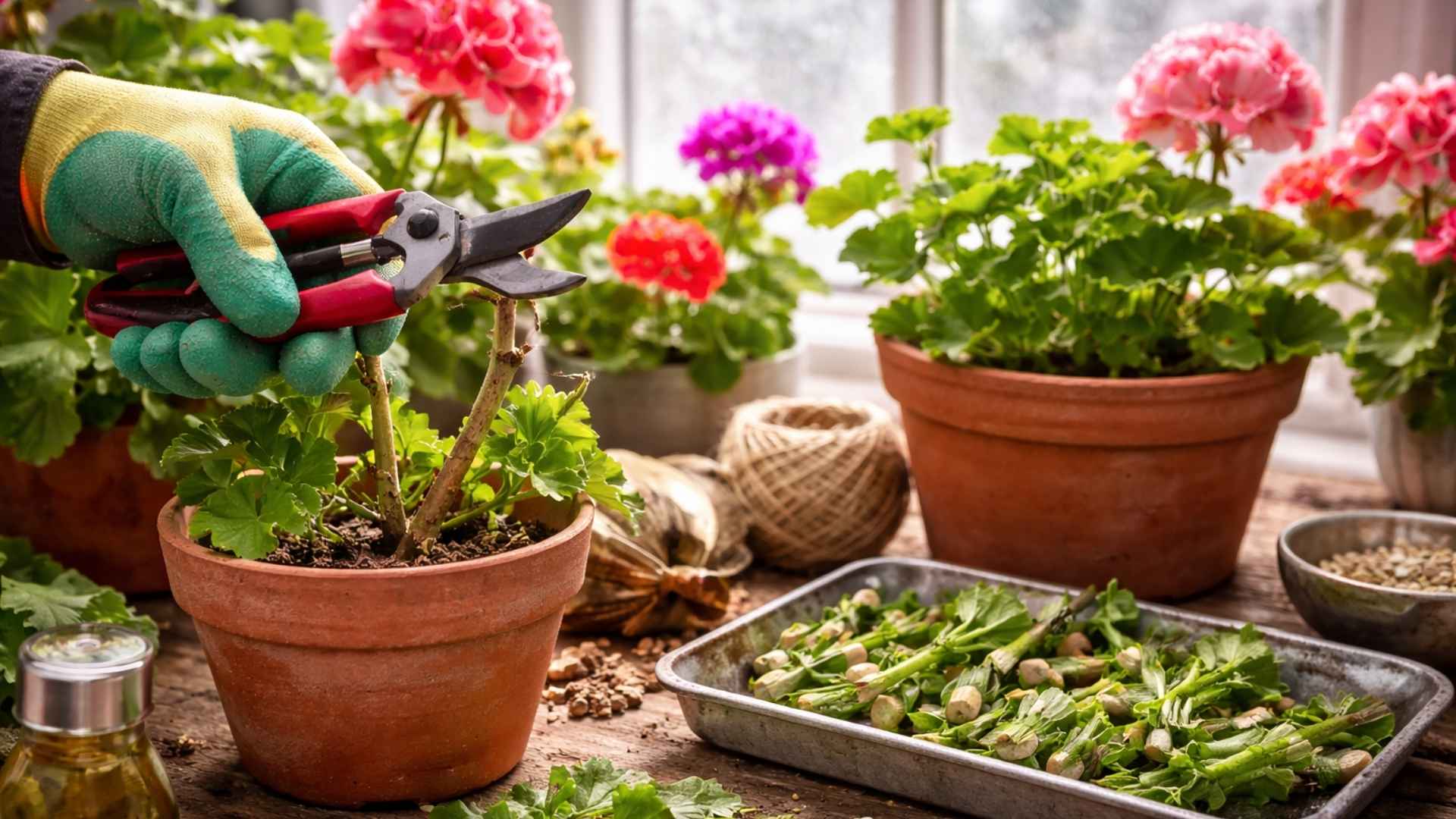
January is the perfect time to prune with intention, not aggressively.
Proper pruning:
- redirects energy into healthy nodes,
- removes weak winter growth,
- forces branching instead of elongation.
How to prune correctly:
- Cut stems back to 2–3 healthy leaf nodes
- Remove thin, pale, or damaged shoots entirely
- Aim for a compact, balanced shape
This creates the foundation for dense, flower-heavy growth later in the season.
Light: The Silent Flower Trigger
After pruning, light becomes the deciding factor.
In January:
- natural daylight is weak,
- windows alone are often not enough.
For best results:
- move plants to the brightest window available,
- rotate pots regularly,
- or use a simple LED grow light for 10–12 hours daily.
Good light keeps internodes tight. Tight internodes mean more flowers later.
Watering: Less Is More in Winter
One of the fastest ways to ruin winter geraniums is overwatering.
In January:
- water only when the top 2–3 cm of soil is dry,
- never let roots sit in cold, wet soil.
Slight dryness keeps plants compact and healthy. Constant moisture leads to rot and weak growth.
Feeding: What NOT to Do
Do not fertilize heavily in January.
Why?
- Nitrogen pushes leaf growth at the wrong time
- The plant cannot use nutrients efficiently in low light
If anything:
- use a very mild, diluted organic feed once a month,
- or skip feeding entirely until daylight increases.
Flowering starts with structure, not fertilizer.
What Happens If You Do This Now?
Gardeners who reset geraniums in January usually notice:
- faster regrowth in late winter,
- more side shoots instead of long stems,
- earlier buds in spring,
- dramatically heavier flowering through summer.
The plant doesn’t rush.
It prepares—and preparation is everything.
Why This Works So Well
Geraniums flower on new, well-lit growth.
January pruning combined with controlled light:
- multiplies flowering points,
- synchronizes growth,
- prevents uneven, chaotic blooming.
You are not forcing flowers.
You are removing obstacles.
Final Thought
January feels like waiting season—but for geraniums, it is decision season.
Take one calm afternoon, prune with intention, give light instead of fertilizer, and water with restraint.
When spring arrives, your plants will already be ahead.
That’s why months later they seem to bloom “without stopping.”
Quick January Checklist for Geraniums
- ✔ Prune back to healthy nodes
- ✔ Maximize light exposure
- ✔ Water sparingly
- ✔ Avoid heavy fertilizing
Simple actions. Massive effect.
FAQ – January Geranium Boost (Pelargoniums)
1. Should I prune geraniums in January?
Yes. Light pruning in January resets the plant, improves airflow, and encourages branching that later carries more flower heads.
2. What’s the best January action for more blooms?
Restarting structure—either by pruning or taking short tip cuttings—creates compact plants that flower harder.
3. How hard can I cut back indoor pelargoniums?
Reduce long stems by about one-third. Avoid drastic cuts on weak plants and always cut above a healthy node.
4. Why do pelargoniums stay green but refuse to flower indoors?
Usually light is too weak and nights are too warm. This causes leaf growth without bud formation.
5. Can I fertilize geraniums in January?
Only lightly. If growth is active under good light, use a diluted feed once every 2–3 weeks; otherwise focus on light and watering.
6. What homemade feed is safest in winter?
A very mild compost tea or a tiny dose of seaweed extract is safer than sugary mixes in winter.
7. Is yeast water a good idea in January?
Not routinely. Indoors it can encourage fungus gnats and sour soil if overused.
8. How often should I water geraniums in winter?
Only when the top layer of soil is dry. Most winter losses come from overwatering.
9. Should I repot pelargoniums in January?
Only if roots are tightly circling and the plant dries too fast. Otherwise wait until late winter or early spring.
10. What’s the biggest January mistake with geraniums?
Keeping them too warm with too little light, which causes weak, stretched growth and delayed flowering.
Discussion (0)
No comments yet. Be the first to start the conversation!
Leave a Reply