Many gardeners focus on feeding plants after problems appear, but flowering success is decided much earlier — at planting time. Tomatoes, peppers, and cucumbers are heavy bloomers by nature, yet poor spacing, shallow roots, weak soil biology, and water stress can silently block their flowering potential.
This guide explains why these vegetables fail to bloom and how planting them correctly from the start changes everything. The approach relies exclusively on natural inputs, biological activation, and simple DIY solutions that work across climates and garden sizes.
The result is stronger roots, balanced growth, and consistent flowering — without synthetic fertilizers.
Why the Way You Plant Determines Flowering
Flowering is not triggered by fertilizer alone. Plants bloom when they feel structurally stable, nutritionally balanced, and biologically supported.
Poor planting methods create stress signals:
- overcrowded roots compete for nutrients,
- shallow planting limits water access,
- compacted soil blocks oxygen,
- sterile soil slows nutrient cycling.
Correct planting eliminates these barriers before they form.
Proper Spacing: Giving Flowers Room to Form
Spacing is one of the most underestimated factors in vegetable gardening.
When tomatoes, peppers, and cucumbers are planted too close:
- roots compete aggressively,
- air circulation drops,
- humidity rises,
- flowers abort instead of setting fruit.
Practical spacing guidelines
- Tomatoes: 45–60 cm (18–24 in)
- Peppers: 35–45 cm (14–18 in)
- Cucumbers: 50–70 cm (20–28 in), depending on training
Adequate spacing allows plants to invest energy into flowers rather than survival.
Planting Depth: Strength Starts Underground
Deep, stable roots support flowering by ensuring continuous access to water and nutrients.
- Tomatoes benefit from deeper planting, encouraging additional root formation along the stem.
- Peppers prefer stable, well-supported root balls planted at the same depth as their original container.
- Cucumbers need loose soil with enough depth to anchor fast vine growth.
Loose soil beneath the planting hole is more important than rich soil at the surface.
Activating Soil Life at Planting Time
Healthy soil blooms before plants do. Biological activity determines how efficiently nutrients reach roots.
Natural soil activators
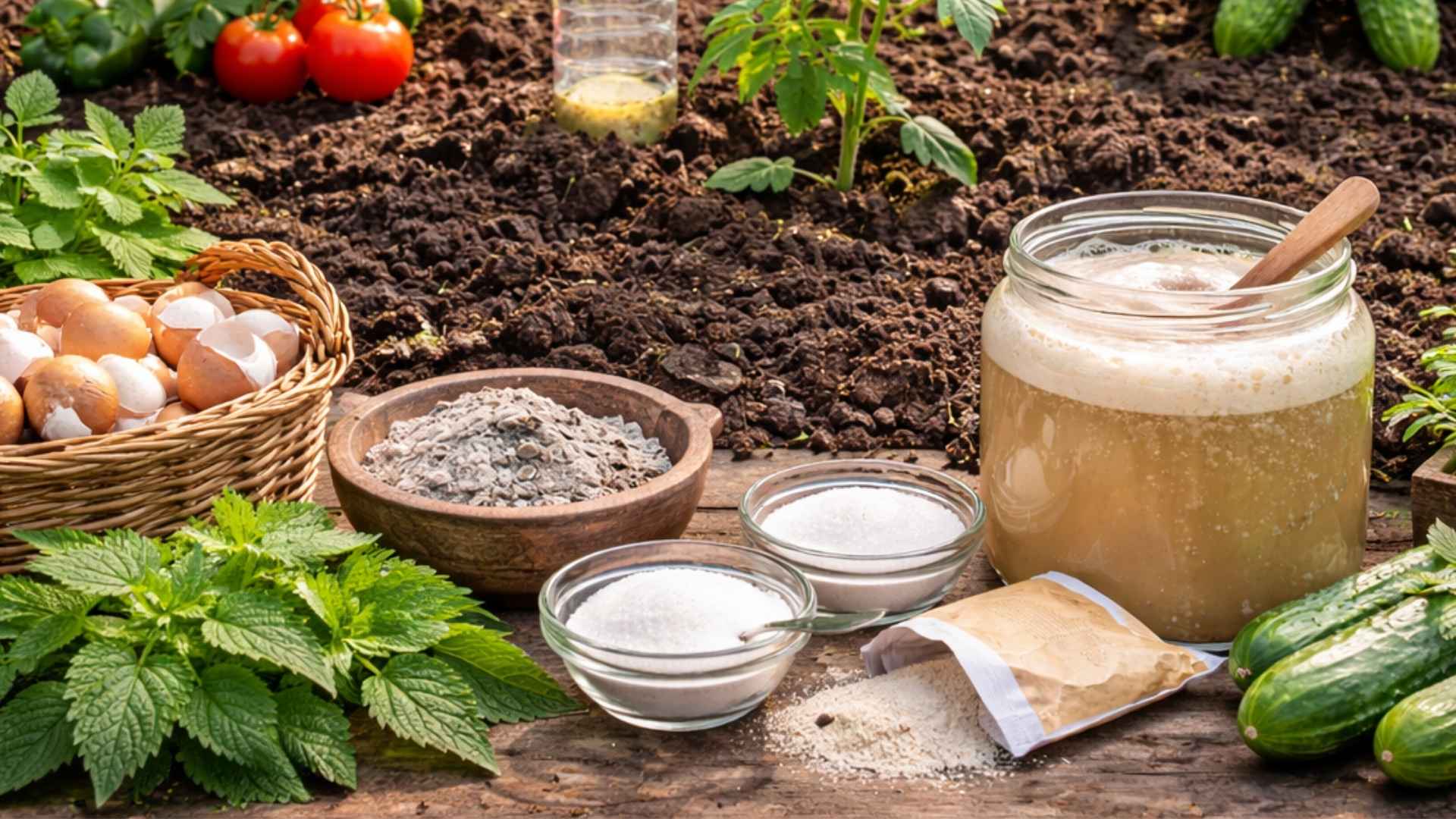
- Yeast-based solutions encourage microbial activity.
- Sugar (small amounts) provides immediate energy for beneficial microbes.
- Baking soda (very low dose) supports microbial balance when soil is overly acidic.
These ingredients do not “feed plants” directly — they activate soil processes that plants depend on.
Homemade Natural Feeds That Support Flowering
Balanced nutrition supports flower formation without forcing leaf growth.
Eggshells (calcium support)
- Crushed and added to planting holes or compost.
- Strengthen cell walls and flower structures.
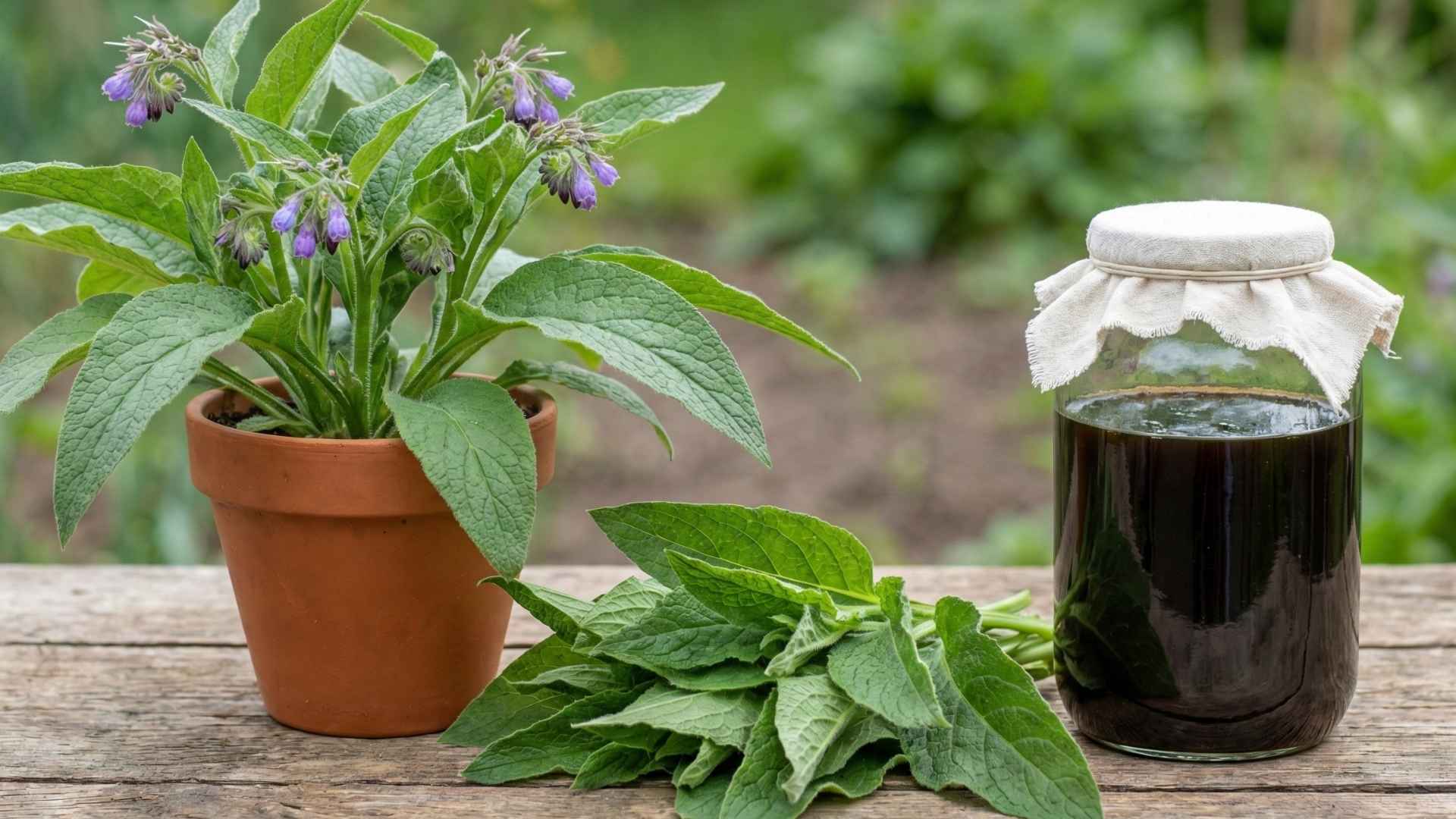
Nettle infusion (early growth)
- Used sparingly at the vegetative stage.
- Supports leaf development before flowering begins.
Wood ash (potassium source)
- Applied lightly to soil surface.
- Supports flowering and fruit formation.
Yeast-based liquid feeds
- Used occasionally to boost soil biology.
- Best applied to established plants.
Moderation is critical. Excess feeding delays flowering instead of promoting it.
Sugar and Baking Soda: When and Why They Help
Used correctly, sugar and baking soda enhance microbial efficiency.
- Sugar: jump-starts beneficial microbes during early soil activation.
- Baking soda: helps stabilize soil environment when acidity blocks nutrient uptake.
These are support tools, not fertilizers, and should never be overused.
DIY Drip Irrigation from Plastic Bottles
Water stress is one of the fastest ways to stop flowering.
A simple bottle-based drip system:
- delivers water slowly and evenly,
- keeps soil consistently moist,
- reduces surface evaporation,
- prevents sudden drought stress.
Bury a perforated bottle near the root zone and refill as needed. This low-cost system stabilizes growth during hot or dry periods.
Why This Method Works Without Chemicals
Chemical fertilizers push fast growth but often disrupt root balance and soil life. This method works because it:
- builds strong roots first,
- activates soil biology naturally,
- maintains steady moisture,
- avoids nutrient spikes.
Plants that feel “safe” biologically invest energy into flowers and fruit instead of emergency survival growth.
Table: Bloom-Boosting Planting Factors at a Glance
| Factor | Correct Approach | Common Mistake |
|---|---|---|
| Spacing | Wide, breathable layout | Overcrowding |
| Planting depth | Root-supported stability | Shallow planting |
| Soil biology | Microbial activation | Sterile soil |
| Feeding | Low-dose, balanced | Excess nitrogen |
| Watering | Slow, consistent moisture | Dry–flood cycles |
When You Will See Results
Plants planted this way often show:
- stronger early growth,
- thicker stems,
- earlier flower formation,
- reduced flower drop,
- more consistent fruit set.
In many cases, flowering improves within two to three weeks, depending on climate and baseline soil quality.
FAQ – Planting for Better Flowering
1. Why do my tomatoes flower but not set fruit?
Stress from heat, poor spacing, or nutrient imbalance is the most common cause.
2. Can peppers be planted too deep?
Yes. Unlike tomatoes, peppers prefer planting at their original depth.
3. Does ash really help flowering?
Yes, when used lightly. Potassium supports flower and fruit development.
4. Is yeast safe for soil?
Yes, when used occasionally and diluted properly.
5. Can sugar harm plants?
Only if overused. Small amounts support microbes, not plants directly.
6. Do cucumbers need deep soil?
They need loose, well-drained soil more than depth alone.
7. Will this work in containers?
Yes, spacing and soil structure matter even more in containers.
8. How often should natural feeds be applied?
Every 2–4 weeks is usually sufficient.
9. Why avoid chemical fertilizers?
They often promote leaves over flowers and weaken soil biology.
10. What is the biggest planting mistake?
Trying to fix poor planting with more fertilizer later.
Discussion (0)
No comments yet. Be the first to start the conversation!
Leave a Reply