Downy mildew is the disease that quietly ruins cucumber seasons around the world. Plants look healthy, vines are full, flowers are setting — and then, almost overnight, leaves yellow, collapse, and yields crash.
What most gardeners discover too late is that sprays alone do not solve downy mildew. Once pressure is high, susceptible varieties simply cannot keep up. The real turning point comes from starting with the right genetics and supporting them with smart field practices.
This guide focuses on what actually works in outdoor conditions: understanding the disease, slowing its spread, and choosing cucumber varieties that were bred to keep producing when others fail.
What Downy Mildew Really Is and Why Cucumbers Are So Vulnerable
Cucumber downy mildew is caused by Pseudoperonospora cubensis, a water-mold organism that behaves differently from common fungal diseases. It spreads through airborne spores, thrives in humid nights, and infects leaves when moisture lingers on the surface.
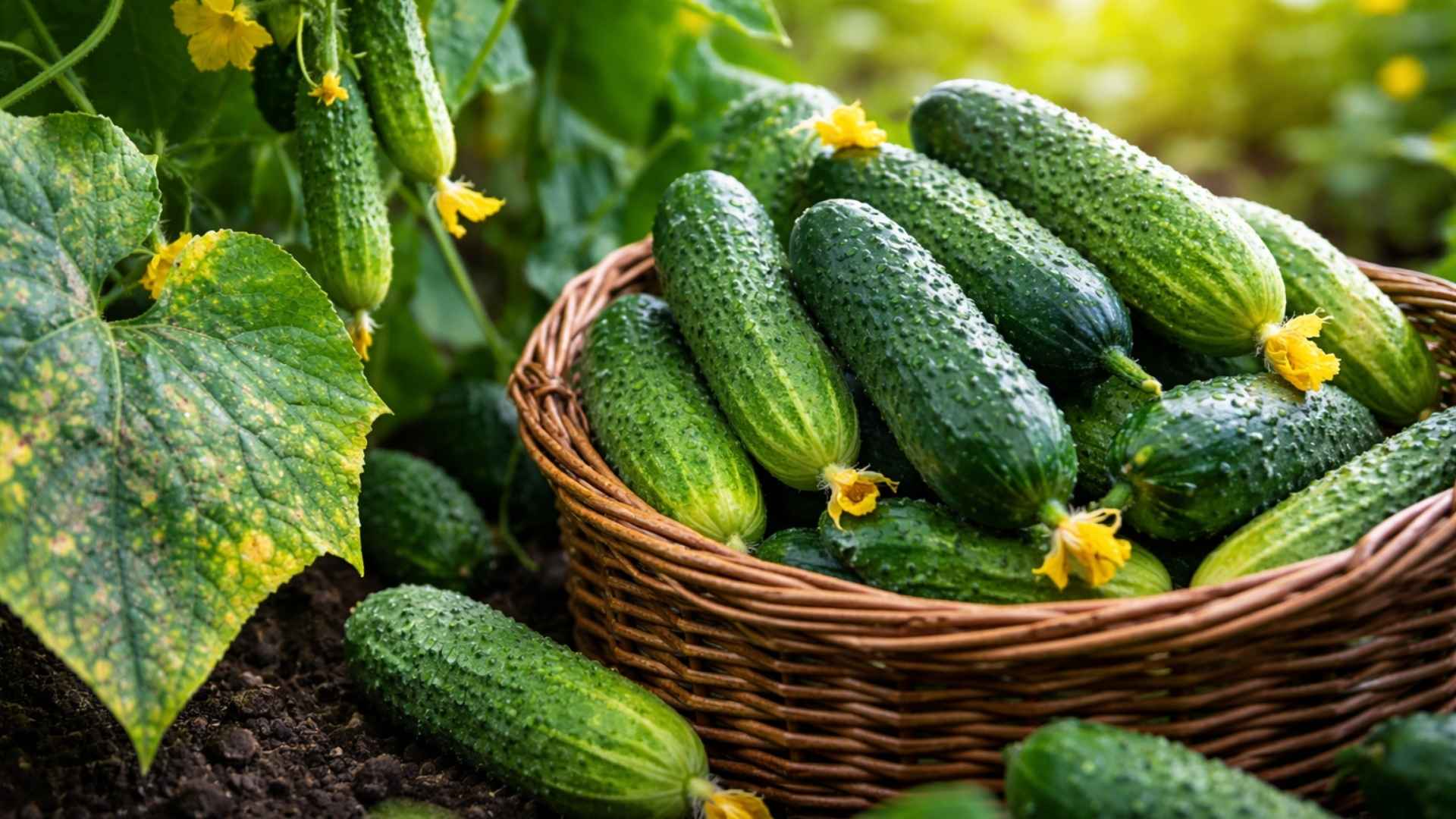
The classic early symptom is angular yellow spotting on the upper leaf surface, limited by leaf veins. Under humid conditions, the underside develops a gray-violet coating. As infection progresses, leaves brown, dry out, and stop feeding the plant — even though roots and stems may still be alive.
Outdoor cucumbers are especially vulnerable because:
- night dew keeps leaves wet for hours,
- dense canopies dry slowly,
- wind carries spores across long distances.
This means downy mildew can appear even in gardens with excellent hygiene and crop rotation.
Why Variety Choice Matters More Than Any Spray Program
Once downy mildew establishes itself, the disease progresses faster than most home-garden interventions can stop it. Resistant or tolerant varieties do not remain spotless — instead, they slow disease development, retain green leaf area longer, and continue feeding fruit.
This difference is critical. A susceptible variety may stop producing within days of infection, while a resistant one can yield for weeks longer under the same conditions.
Resistance labels vary:
- HR (high resistance) means strong suppression,
- IR (intermediate resistance) means delayed progression,
- tolerant means symptoms appear but productivity is maintained.
In real gardens, even intermediate resistance can be the difference between harvest and total loss.
Twelve Outdoor Cucumber Varieties Known for Downy Mildew Resistance
The following varieties are repeatedly referenced by international growers, seed catalogs, and field trials as reliable under downy mildew pressure. They are widely available across regions and suitable for outdoor cultivation.
DMR 401
A benchmark slicing cucumber specifically developed for downy mildew resistance. It maintains leaf health longer than most standard slicers and is often used as a reference variety in disease-resistance discussions.
Brickyard F1
A vigorous outdoor slicer with a broad resistance package that includes downy mildew. Known for strong regrowth and stable yields under fluctuating weather conditions.
Bristol
Favored by growers in humid regions for its ability to hold foliage late into the season. While not immune, it consistently outperforms older open-pollinated types.
Diomede F1
A modern hybrid bred for field performance. Its downy mildew resistance allows it to stay productive even when neighboring plants decline.
Dominator F1
An outdoor slicing cucumber selected for uniform fruit and disease resilience. It handles downy mildew pressure without rapid defoliation.
Laser 160
Recognized for balanced vigor and disease tolerance. Performs reliably in gardens where downy mildew appears every season.
Fanfare F1
A versatile slicing variety with documented downy mildew resistance. It combines steady fruit set with improved leaf longevity.
Rockingham F1
Chosen for consistency in challenging weather. It slows disease spread and supports extended harvest periods.
Marketmore 97
An improved open-pollinated option carrying resistance traits absent in older Marketmore lines. A practical choice for gardeners who save seed.
Poinsett 76
A classic outdoor cucumber widely grown in warm, humid climates. While older, it remains valued for dependable tolerance to downy mildew.
Calypso F1
A pickling cucumber bred for disease resistance, including downy mildew. Maintains productivity even when leaf pressure increases.
Citadel F1
A commercial-grade pickler with strong field durability. Its resistance profile makes it suitable for outdoor beds prone to disease outbreaks.
How to Slow Down Downy Mildew in Outdoor Beds
Resistant varieties perform best when paired with simple but disciplined growing practices.
Key principles:
- water at soil level, never overhead in the evening,
- space plants wider than minimum recommendations,
- trellis or lift vines when possible to improve airflow,
- avoid excess nitrogen that promotes soft, dense foliage,
- remove severely infected lower leaves early.
These steps do not eliminate downy mildew, but they reduce the speed of infection, allowing resistant varieties to express their full potential.
What to Do When Downy Mildew Appears Anyway
When symptoms are visible, the goal shifts from prevention to damage control.
Effective response:
- remove heavily infected leaves without stripping the plant bare,
- harvest frequently to reduce plant stress,
- keep foliage dry and well ventilated,
- avoid switching products randomly if fungicides are used.
Attempting to “save every leaf” usually accelerates decline. Strategic pruning and aggressive harvesting are far more effective.
What Not to Do (Common Mistakes)
Avoid:
- planting susceptible varieties year after year,
- overhead watering late in the day,
- overcrowding plants for maximum yield,
- relying on home remedies once infection is advanced,
- excessive nitrogen feeding during humid periods.
Most failures attributed to “bad weather” are actually structural mistakes made early in the season.
What Results to Expect with Resistant Varieties
Gardeners who switch to downy mildew-resistant cucumbers typically observe:
- slower disease progression,
- longer-lasting green foliage,
- extended harvest windows,
- more consistent yields across seasons.
This is not a guarantee of disease-free plants — it is a realistic strategy for outdoor success.
FAQ – Downy Mildew and Resistant Cucumbers
1. Are downy mildew-resistant cucumbers immune?
No. They slow disease development and stay productive longer, but they are not immune.
2. Is resistance useful without spraying?
Yes. Resistance is most valuable in low-input gardens and dramatically improves outcomes even without sprays.
3. Can I grow resistant cucumbers in containers?
Yes, provided airflow and drainage are excellent and spacing is respected.
4. Do pickling cucumbers resist downy mildew better than slicers?
Not inherently. Resistance depends on breeding, not fruit type.
5. When does downy mildew usually appear?
Most often during periods of warm days, cool nights, and prolonged leaf wetness.
6. Should I remove infected plants completely?
Only if they are no longer producing. Partial leaf removal is usually sufficient.
7. Does crop rotation prevent downy mildew?
It helps with soil-borne diseases, but airborne spores mean rotation alone is not enough.
8. Can I save seed from resistant hybrids?
Hybrids will not breed true. Open-pollinated varieties like Marketmore 97 are better for seed saving.
9. Does mulching help?
Yes. Mulch reduces soil splash and helps keep foliage drier.
10. What is the single best strategy overall?
Start with resistant genetics and support them with airflow, dry leaves, and balanced nutrition.
Discussion (0)
No comments yet. Be the first to start the conversation!
Leave a Reply