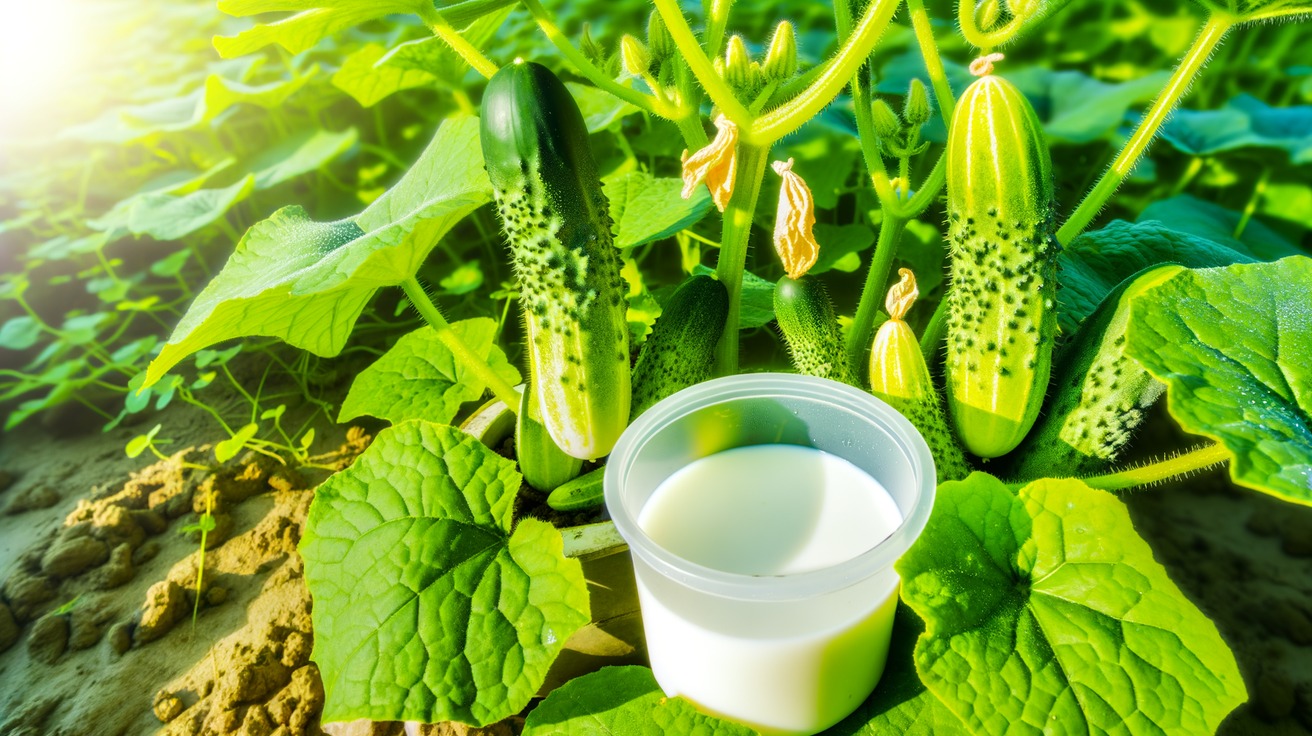


At first, it sounded like one of those internet gardening myths. A simple liquid, made from ingredients most people already have at home, supposedly causes cucumbers to explode with growth and tomatoes to recover strength almost overnight. No chemicals. No expensive products. Just a bucket, milk, and yeast.
But after seeing the same results repeated by gardeners in different climates, it became clear that this method is not magic — it is biology working in the plant’s favor. Used correctly, this natural liquid feed can noticeably improve growth, flowering, and overall plant vitality within a short time.
This article explains how the mixture works, how to prepare it safely, and how to use it without harming your plants, all rewritten and structured as a fully original guide.
What Is This Liquid and Why Gardeners Swear by It
The mixture is a natural microbial and nutrient activator, not a classic fertilizer in the traditional sense. Instead of forcing growth with high doses of minerals, it stimulates soil life and improves nutrient uptake that plants are already capable of performing.
Cucumbers and tomatoes respond especially well because they are fast-growing, heavy feeders with active root systems. When soil biology becomes more efficient, these plants show results quickly — often within days.
The key lies in combining:
- a gentle nutrient source,
- beneficial microorganisms,
- and a carrier that improves soil activity.
Ingredients: Simple but Purposeful
This method uses only two core ingredients, diluted with water to make a safe, plant-friendly solution.
What you need
- 1 liter of warm milk (raw milk works best, but store-bought milk is acceptable)
- 1 packet of dry yeast
- Clean water to make a total of about 10 liters
Warm milk helps activate yeast quickly, while water ensures the final solution is gentle enough for roots.
Step-by-Step Preparation Method
- Pour 1 liter of warm (not hot) milk into a container.
- Add one packet of dry yeast.
- Stir thoroughly until the yeast dissolves completely.
- Pour this mixture into a bucket and add water to reach approximately 10 liters.
- Mix well and use immediately.
The solution does not need long fermentation. Fresh preparation gives the most consistent results.
How to Apply the Liquid Correctly
Application matters as much as the recipe itself. Used incorrectly, even natural solutions can cause imbalance.
Recommended use
- Apply directly to the soil, not on leaves.
- Water cucumbers and tomatoes once every two weeks.
- Use on already established plants, not seedlings.
The soil should be slightly moist before application. Avoid applying to completely dry soil, especially during heatwaves.
Alternative Method: Milk Without Yeast
If yeast is not available, milk alone can still be used with good results.
Milk-only option
- Mix milk and water in a 1:1 ratio.
- Apply as a soil drench.
- Use less frequently than the yeast version.
This option provides nutrients and mild soil protection but has weaker biological stimulation than the full recipe.
Why This Method Works So Fast
The visible results are not accidental. Several processes happen simultaneously in the soil.
Natural nutrients
Milk contains amino acids, calcium, phosphorus, and B vitamins. These compounds support root development, cell strength, and flowering without pushing excessive leaf growth.
Beneficial microorganisms
Yeast introduces and stimulates microbial activity. Active microbes help break down organic matter and make nutrients more accessible to plant roots.
Soil hygiene and pest pressure
Milk sugars, including lactose, disrupt certain soil pests that cannot digest them. This reduces root stress and improves overall plant health indirectly.
When plants face fewer obstacles below ground, energy shifts toward growth, flowering, and fruiting.
What You Can Expect After Application
Gardeners using this method often report:
- visibly faster leaf expansion,
- stronger stems,
- more intense flowering,
- improved fruit set,
- better overall plant color.
Cucumbers may rapidly increase in vine length, while tomatoes often show renewed growth after stagnation. Results vary with climate and soil, but healthy plants usually respond quickly.
Important Warnings and Common Mistakes
This mixture is effective, but moderation is essential.
Avoid:
- applying more often than recommended,
- increasing yeast or milk concentration,
- using on weak seedlings,
- applying during extreme heat or drought stress.
Overuse can lead to excessive microbial activity that temporarily disrupts soil balance.
Table: Milk and Yeast Liquid at a Glance
| Aspect | Recommended Practice | What to Avoid |
|---|---|---|
| Frequency | Every 14 days | Weekly application |
| Dilution | 1L milk + yeast / 10L water | Concentrated mixtures |
| Application | Soil drench | Leaf spraying |
| Plant stage | Established plants | Young seedlings |
Is This Better Than Commercial Fertilizers?
This liquid is not a replacement for long-term soil nutrition. It works best as a growth stimulant and soil activator, not as a complete feeding program.
Used occasionally, it complements compost, organic matter, and balanced fertilization. It is especially useful when plants slow down despite good care.
FAQ – Milk and Yeast Liquid for Cucumbers and Tomatoes
1. Can this liquid be used on other vegetables?
Yes, but cucumbers and tomatoes respond the strongest. Use cautiously on other crops.
2. How fast can results appear?
In healthy plants, visible improvement may occur within several days.
3. Is raw milk necessary?
Raw milk works best, but regular store milk also delivers results.
4. Can I store the mixture?
No. It should be used fresh for best effectiveness.
5. Does this replace regular fertilization?
No. It supports growth but does not replace balanced nutrition.
6. Can I spray this on leaves?
Soil application is safer and more effective.
7. Is yeast harmful to soil?
In proper dilution and frequency, it supports soil life rather than harming it.
8. Can I combine this with other organic fertilizers?
Yes, but avoid using multiple stimulants at the same time.
9. Will this attract pests?
When diluted properly, it does not attract pests and may reduce some soil pressure.
10. How often should I really use it?
Every two weeks is sufficient. More is not better.
Discussion (0)
No comments yet. Be the first to start the conversation!
Leave a Reply